What is the average penis size?
Published research suggests there is a wide natural range in penis size, and variation is common. One of the most cited papers is a systematic review published in
BJU International, which analysed measurements from
15,521 men taken by health professionals. It reported average measurements of:
9.16 cm flaccid length
9.31 cm flaccid circumference
13.12 cm erect length
11.66 cm erect circumference
These figures can be useful for context, but size alone does not determine whether any treatment is appropriate. A consultation is the best way to assess individual concerns, anatomy, goals, and whether further medical review may be more suitable.
Will my penis feel normal after a penis enlargement procedure?
Most likely, yes.
Everyone heals differently. When erect, your penis will maintain its normal look and feel, with greater girth. Your clinician will explain what people commonly notice during the settling phase, what is considered typical, and what would warrant review. If you proceed, follow-up is used to check healing and address any concerns.
Is Penile Augmentation The Same As Penis Enhancement?
They’re often used interchangeably online. In clinic, your doctor will clarify the specific concern you’re trying to address (i,e symmetry, girth, appearance at rest, comfort) and what options may or may not suit your anatomy.
Can I fly in for penis enlargement at Contour Clinics?
Yes. You should avoid flying for 24-48 hours post your appointment. Your doctor can advise further on practical planning and recovery considerations.
Where Would Volume Be Placed If That Option Is Considered?
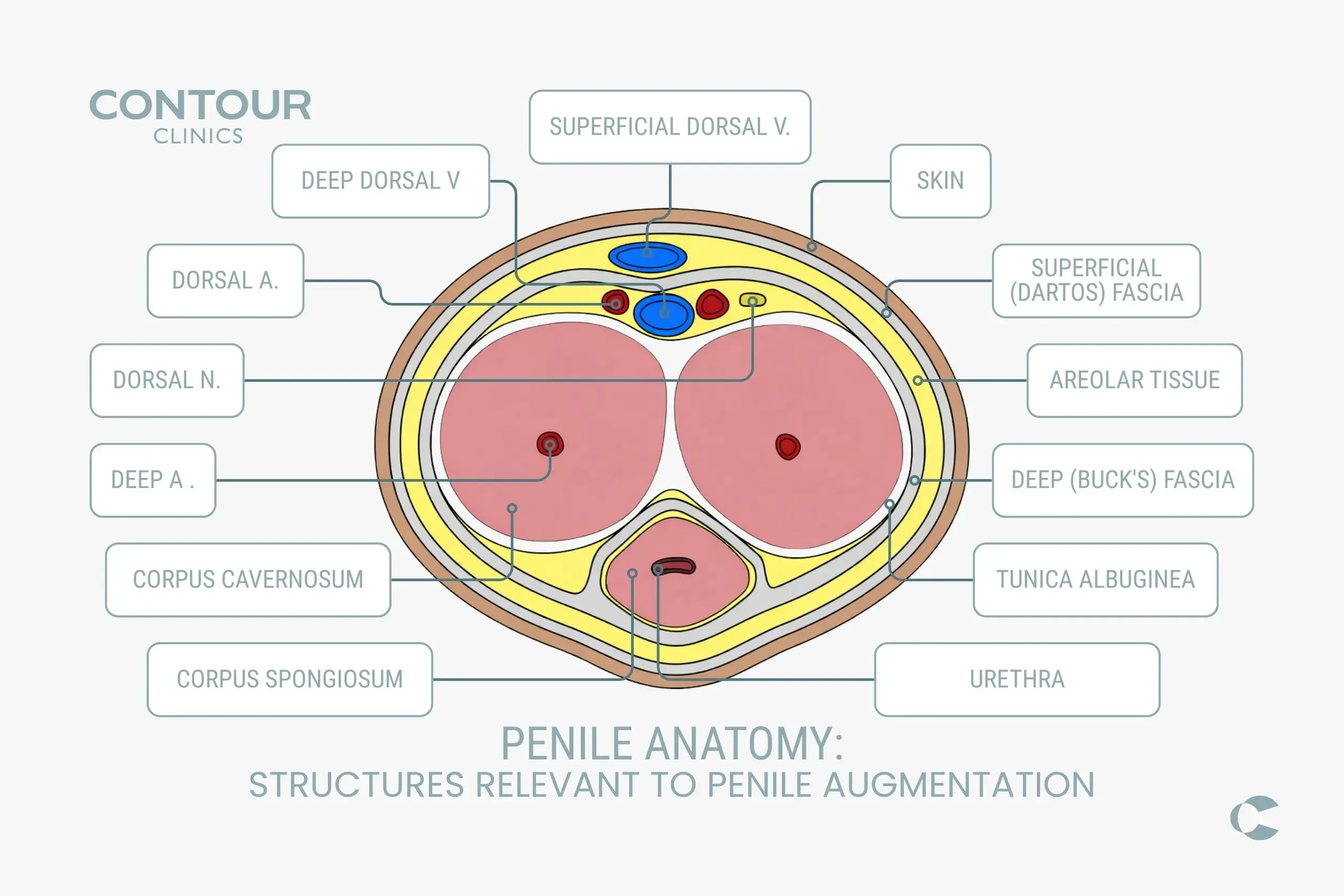
If volumisation is discussed, your clinician can explain the relevant anatomy and the plane of placement in general terms, without over-promising outcomes. This should include what the area contains (skin, fascia layers, erectile tissues, nerves and vessels), why careful technique matters, and what risks relate to placement.
Can I Get A Bigger Glans Or Head?
Some men ask about glans-focused options for appearance or proportion. This needs careful suitability screening and a clear discussion of limitations and risks, particularly around sensitivity and tissue health. Your clinician can advise whether it’s appropriate to discuss, or whether alternative pathways or referral are better.
Can Glans Enhancement Help With Premature Ejaculation?
Yes, it can help in some men.
Glans enhancement is sometimes used to reduce penile sensitivity, which may subtly subdue sensation during intercourse. For men whose premature ejaculation is strongly linked to hypersensitivity, this can help them last longer and feel more in control during sex.
Premature ejaculation can have more than one cause, including sensitivity, anxiety, arousal patterns, relationship, and other physical or psychological contributors. Because of that, glans enhancement is not a suitable solution for every male.
Can Penile Augmentation Correct Peyronie’s Disease?
If you have penile curvature, plaques, pain, or suspected Peyronie’s disease, it’s important to be assessed properly. Some cosmetic concerns can overlap with medical conditions, but curvature often requires urology input. Your clinician may recommend referral for diagnosis and management before any aesthetic plan is discussed.
Will Penis Enhancement Affect Sensation Or Sexual Function?
Any intimate-area procedure carries risks. Your doctor will explain risks relevant to you, which may include swelling, bruising, infection, scarring, altered sensation, and the possibility that your outcome may not match expectations.
If your primary concern is erectile function, read our Erectile Dysfunction page here.
What Happens After A Penile Augmentation Procedure?
Aftercare depends on the approach used. Your clinician will provide clear guidance on hygiene, activity restrictions, swelling management, and when to book review. If something doesn’t feel right, you should be advised to contact the clinic promptly for assessment.
Does Penile Augmentation Hurt?
Discomfort varies between individuals and depends on what’s done. Your clinician can talk you through comfort measures, expected sensations, and typical recovery considerations, including what pain relief may be appropriate for you.