
Are Exosomes the Same as Stem Cells?
No. Stem cells are living cells with the ability to divide and differentiate into other cell types. Exosomes are non-living extracellular vesicles – tiny biological packages released by cells, including stem cells, that carry signalling molecules. Exosomes are sometimes described as “the messengers stem cells use to communicate” – they carry the signals without being the cells themselves. This distinction matters both scientifically and from a regulatory perspective.
Where Do the Exosomes Used at Contour Clinics Come From?
The exosomes used in clinical settings are derived from stem cells under controlled laboratory conditions. The specific source, the manufacturer, the laboratory standards, and the rationale for the choice are all covered in your consultation.
Are Exosomes Derived From Human Tissue?
Sometimes they are. Many exosome products used in clinical regenerative medicine are derived from human stem cell sources, cultured under controlled laboratory conditions. Others use plant-derived or non-human animal sources. Each source has different scientific characteristics and different evidence bases. The specific source of the exosomes used in your treatment, and the clinical reasoning behind the choice, will be explained in your consultation.
Are Exosomes Injected or Applied to the Surface of the Scalp?
Exosomes are only approved for topical use in Australia. There is no TGA approval for injection.
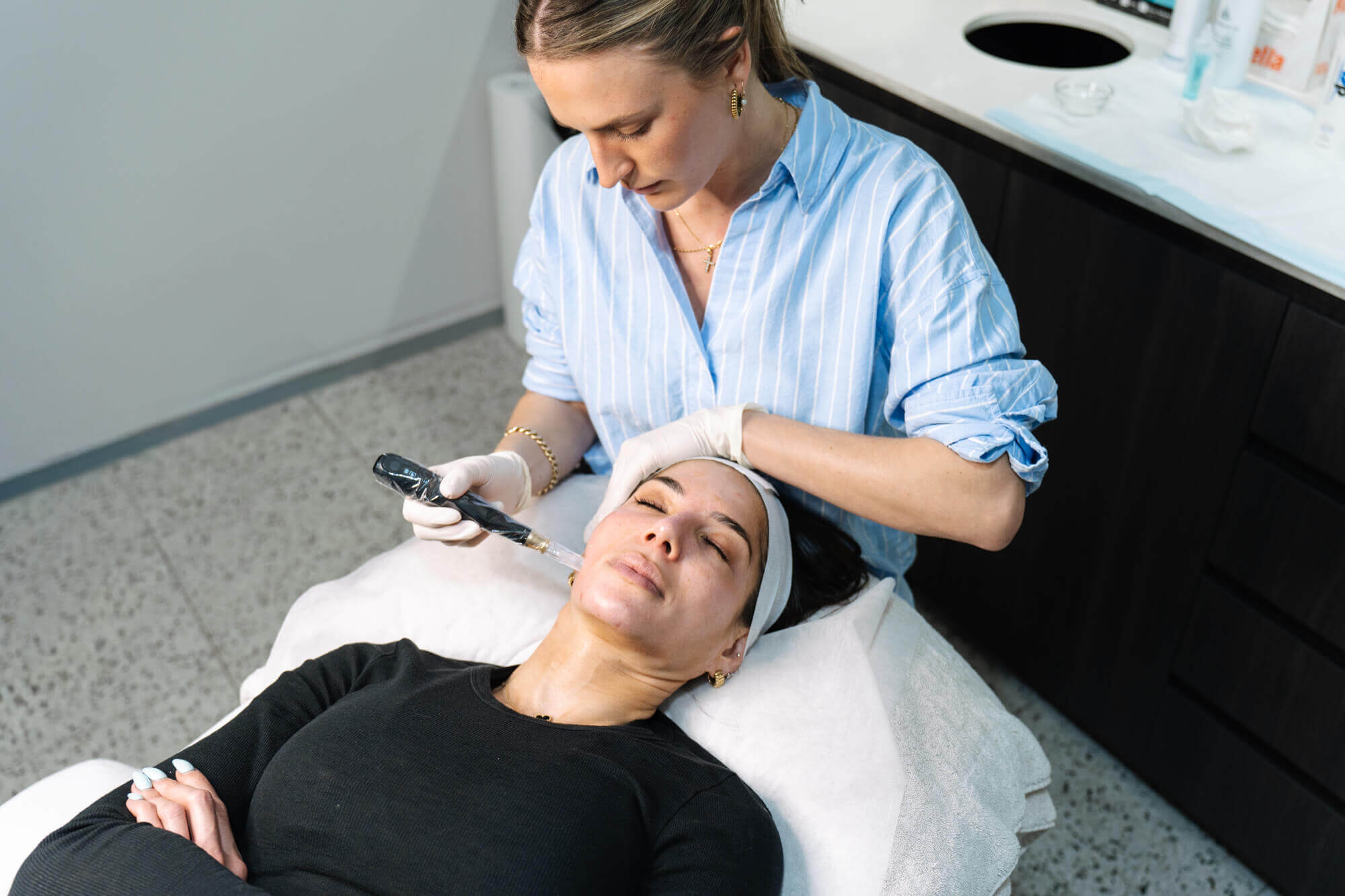
This does not affect the potency of the treatment as exosomes are tiny compared to other cells in the blood. Each treatment, we deliver billions of exosomes to the desired area, using micro-needling for exosome absorption.
To give you an idea of how small exosomes are here is a comparison table:
🔬 Size Comparison (Approximate Diameters):
| Structure |
Size (Diameter) |
| Exosomes |
30–150 nanometers (nm) |
| Platelets |
2–3 micrometers (μm) |
| Red Blood Cells (RBCs) |
6–8 micrometers (μm) |
📏 Relative Scale
-
1 micrometer (μm) = 1,000 nanometers (nm)
-
So, RBCs are ~50–250 times larger than exosomes.
-
Platelets are ~15–100 times larger than exosomes.
What's the Difference Between Exosomes and PRP for Hair?
PRP (platelet-rich plasma) is derived from your own blood, processed in clinic to concentrate the platelets and growth factors. Exosomes are laboratory-prepared from stem cell sources and are standardised between sessions. Both fall under the broader category of hair biostimulation, both have published research, and both have advocates in the medical community. The most suitable choice for any individual depends on the specifics of their hair loss, their goals, and their assessment – which is what the consultation is for.
Will Exosomes for Hair Loss Work for Women?
Yes. Exosomes can be highly effective for women. Hair biostimulation is also relevant for some women – particularly those experiencing postpartum shedding, telogen effluvium, or diffuse thinning where follicles remain present. Whether it’s an appropriate option for any individual woman depends on the specific cause of the hair loss, the clinical picture, and her broader medical context.
Can I Have Exosomes if I'm on Minoxidil or Finasteride?
In most cases, yes – many people use biostimulation alongside oral or topical pharmaceutical treatments. Your consultation will include questions about any current medications, supplements, and topical products to make sure the approach is appropriate for your specific situation.
How Does the Science of Exosomes Compare to Minoxidil and Finasteride?
Minoxidil and finasteride are pharmaceutical treatments for hair loss with decades of clinical use, well-established evidence bases, and TGA approval for the indication. Exosomes are a newer regenerative approach with a smaller but growing body of clinical evidence, and they work via a different mechanism (cellular signalling and follicle environment support, rather than vasodilation or DHT reduction). They’re not direct replacements for each other – many people use them complementarily, under medical guidance. The right combination, if any, is given in a consultation.
Will Exosomes Regrow Hair in Completely Bald Areas?
The honest answer is no. Biostimulation supports existing follicles. In areas where the scalp is smooth and the follicles have been lost, there’s nothing left for the exosomes to support. If your hair loss is at that stage in certain areas, the consultation will cover that openly, and the conversation will likely turn to whether a hair transplant assessment is the more appropriate path. Other approaches like PRP and LED light therapy may also be considered as part of a broader plan to support remaining follicles in adjacent areas.
Can I Combine Exosomes With a Hair Transplant?
Many hair transplant surgeons recommend post-operative biostimulation as part of long-term maintenance of transplant results. The transplanted follicles still need a healthy scalp environment to thrive in, and the surrounding non-transplanted hair continues to be subject to the underlying hair loss process. A consultation can cover whether and how this fits into your specific situation.
Is Exosome for Hair Treatment Painful?
Micro-needling with exosomes is generally well tolerated. Topical anaesthetic is applied to the scalp before the procedure to reduce sensation. Most men describe the procedure as mildly uncomfortable rather than painful, with the scalp feeling tender or slightly raw for the first day afterwards. Specific pain management approaches are discussed at your consultation.
How Long Is Each Appointment?
The procedure itself takes around 45 minutes, including topical anaesthetic application time. The consultation is a separate, initial appointment that can be booked in advance.
How Many Sessions Are Typical for Hair Exosomes?
This varies significantly between individuals depending on the type of hair loss, the stage, and the response to treatment. Generally, you’ll have an initial course of sessions over several months, followed by review and consideration of maintenance. Specifics for your situation – how many sessions, at what intervals, and with what review points – are covered in your consultation.
Will I See Hair Growth Straight Away?
This varies significantly between individuals depending on the type of hair loss, the stage, and the response to treatment. Generally, you’ll have an initial course of sessions over several months, followed by review and consideration of maintenance. Specifics for your situation – how many sessions, at what intervals, and with what review points – are covered in your consultation.
Does the Consultation Cost Anything?
Your consultation is complimentary. A $75 deposit secures your booking and is credited to your treatment if you proceed or refunded in full if you decide not to. Read more about how deposits work.