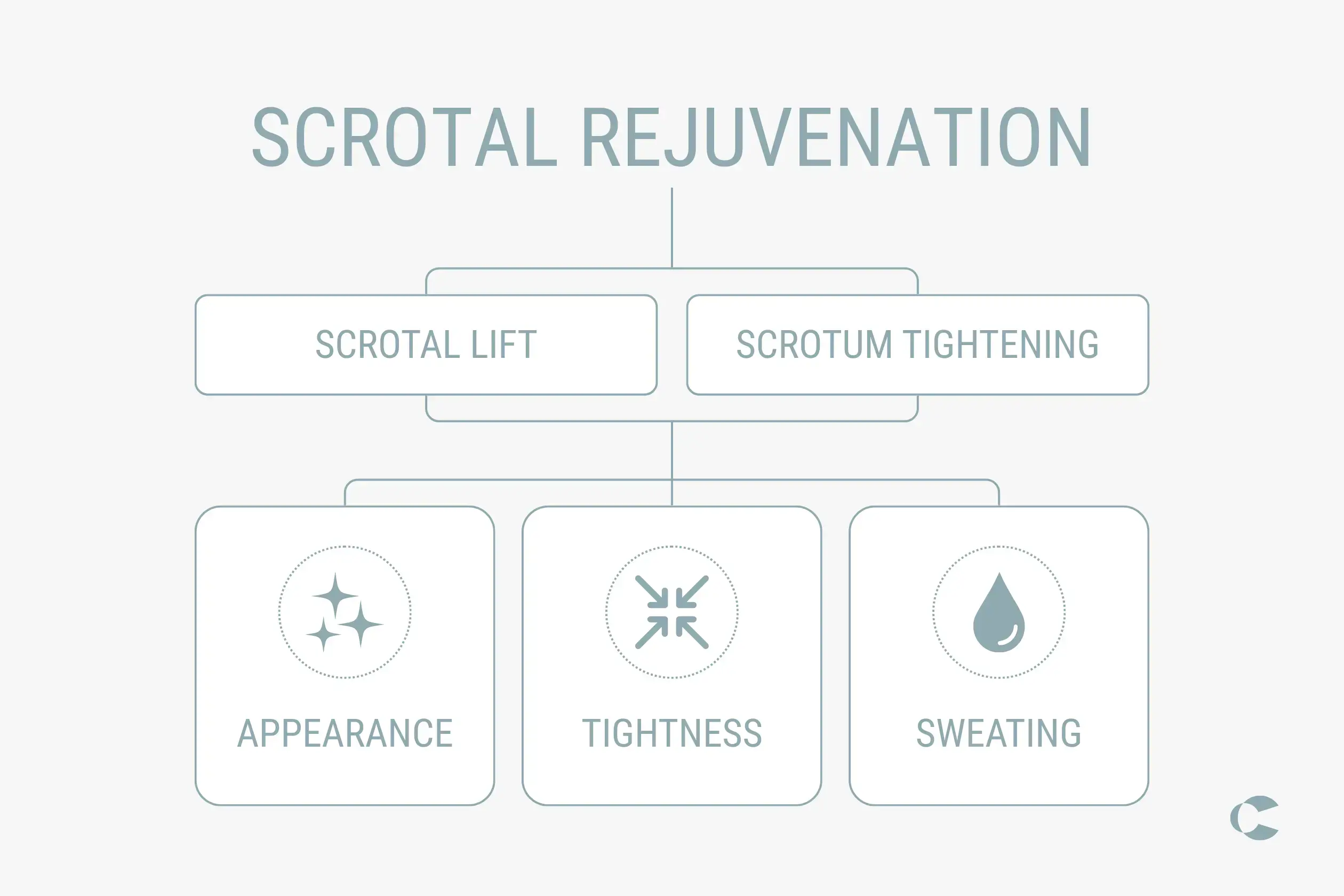
Why are my balls always tight, or sitting so high?
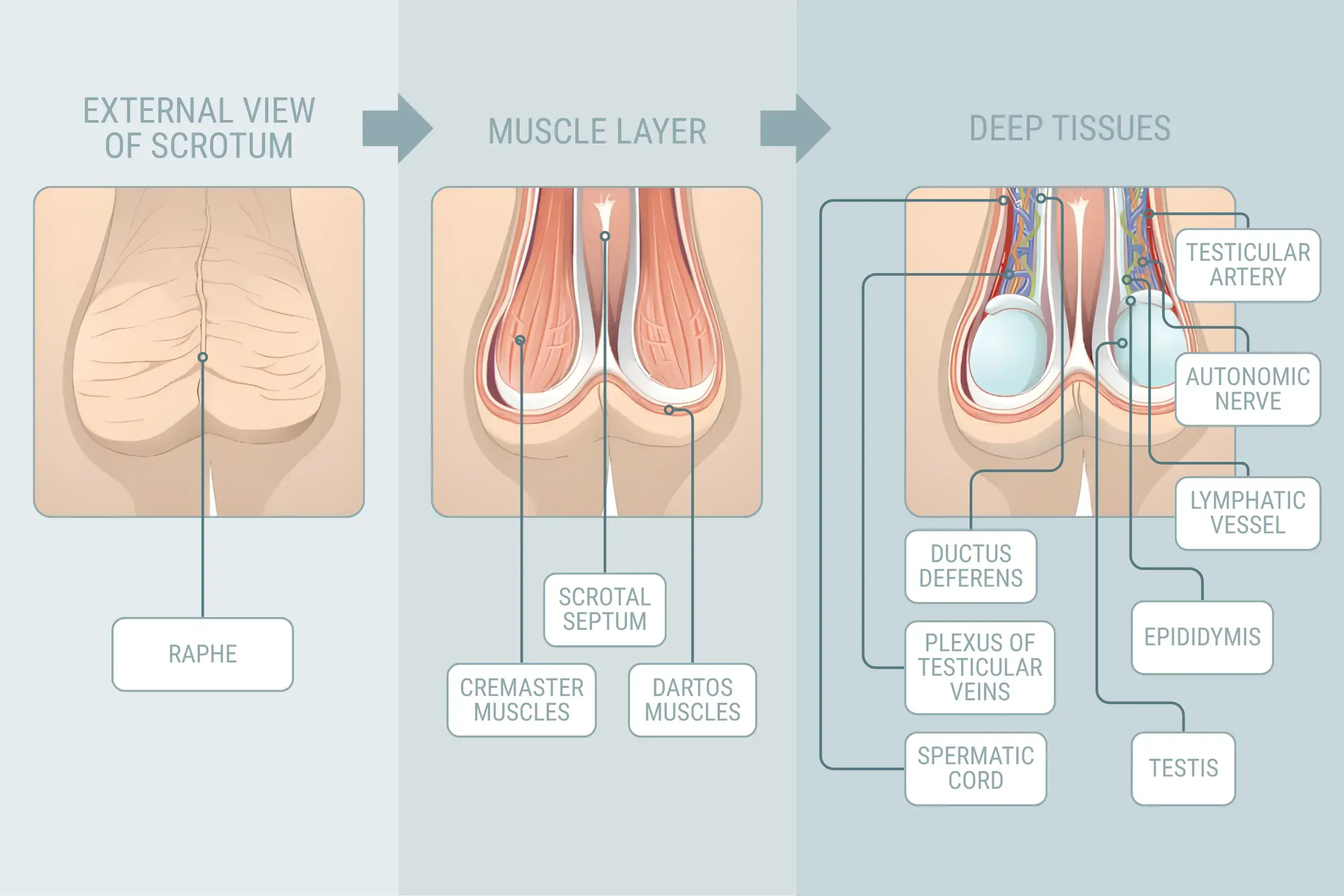
Scrotal position is controlled mainly by two muscles, the cremaster and the dartos. Both contract and relax throughout the day in response to temperature, physical activity, arousal, and stress. When they contract, the testicles are drawn closer to the body and the scrotum sits higher and tighter. When they relax, the testicles hang lower.
There’s a wide range of what’s “normal” here. Some men’s scrotums sit consistently higher and tighter, others hang lower, and most men notice the position changes through the day depending on what they’re doing and how warm or cold they are. Baseline muscle tone varies between individuals, and some men naturally sit at the tighter end of the spectrum without anything being medically wrong.
If the tightness is persistent, uncomfortable, or something you’d like to understand better in your own situation, book a consultation to discuss.
Why does the scrotum tighten and loosen through the day?
The scrotum’s main job, anatomically, is temperature regulation. Sperm production needs a temperature slightly cooler than core body temperature, so the scrotum adjusts its position to keep the testicles in the right range. In warmer conditions, the cremaster and dartos muscles relax and the scrotum hangs lower, away from the body, to cool down. In cooler conditions, they contract and pull the testicles closer in for warmth.
Temperature isn’t the only trigger. Physical activity, arousal, and the body’s stress response all cause the same muscles to contract. That’s why the scrotum can sit noticeably higher and tighter during exercise, in cold weather, or in situations where the body’s fight-or-flight response is engaged, and sit lower in a warm shower or a relaxed setting.
None of this is unusual. It’s the scrotum doing what it’s anatomically designed to do.
Why is scrotal sweating worse for some men than others?
The scrotal area has a high density of sweat glands, and there’s considerable natural variation in how much any individual sweats in this region. For some men, scrotal sweating is a significant day-to-day concern. If it’s affecting your comfort or your daily life, it’s worth raising with a doctor rather than assuming nothing can be done.
What causes changes in scrotal appearance over time?
A few things are at play. Skin across the body loses collagen and elasticity with age, and the scrotum is no exception. Baseline muscle tone in the cremaster and dartos can reduce over time, which may let the scrotum sit lower than it used to. Weight changes, long-term temperature exposure, and individual factors like genetics also play a role.
The result, for many men, is that the scrotum’s appearance in their forties or fifties looks different from how it looked in their twenties. That’s a normal part of ageing, not a medical problem. Whether it’s something worth addressing is a personal decision, and one worth talking through properly rather than deciding based on what you’ve read online.
What happens during a scrotal rejuvenation consultation?
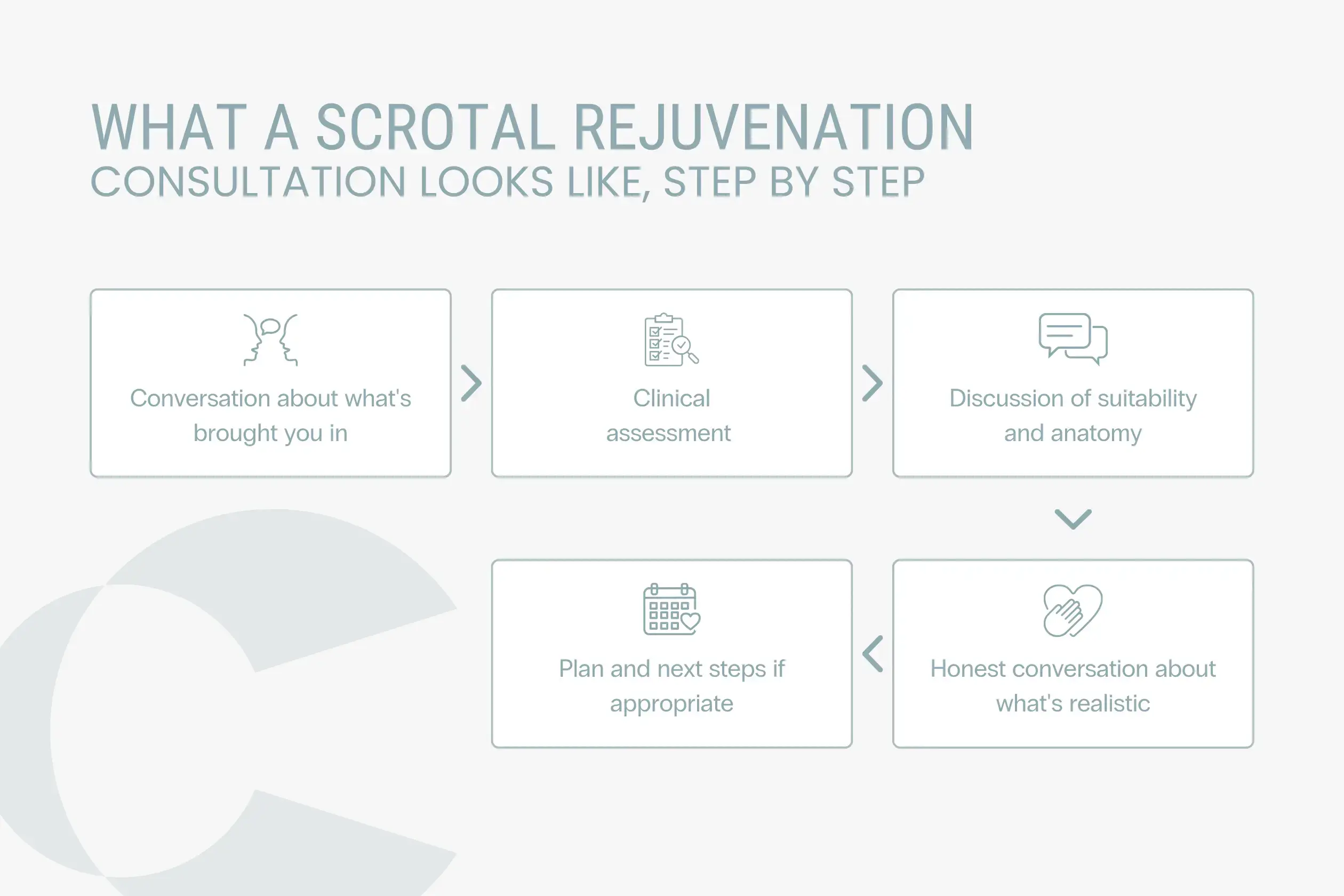
The appointment is a private, unhurried conversation with Dr Gavin Scriven. He’ll ask you about what’s brought you in, what you’ve been noticing, and what you’re hoping to understand or address. A clinical assessment of the area follows, along with a discussion of suitability, anatomy, and what is and isn’t realistic for you. If a plan is appropriate, Dr Scriven will talk you through it. If no plan is appropriate, he’ll tell you that.
Who is a scrotal rejuvenation consultation suitable for?
A scrotal rejuvenation consultation is typically suitable for men over the age of 18 who are:
- Considering the appearance of their scrotum
- Living with scrotal tightness or scrotal sweating they’d like to discus
- Doing some reading online about terms like scrotal lift or scrotum tightening and would like a considered medical view.
The consultation is also suitable for men who are simply unsure whether anything is worth doing and would like to talk it through with a doctor before deciding.
When should I see a GP or urologist instead of a cosmetic medicine clinic?
If you’re experiencing any of the following, your GP or a urologist is the right first step, not a cosmetic medicine consultation:
- Pain in the testicles or scrotum, particularly if it’s new, persistent, or severe
- Swelling, a lump, or a change in shape you can feel
- Sudden changes in scrotal appearance, sensation, or function
- Suspected varicocele, hydrocele
- Concerns about fertility, sperm count, or hormonal health
A scrotal rejuvenation consultation is appropriate when your concerns are about the appearance of the scrotum, ongoing scrotal tightness, or scrotal sweating, in the absence of the symptoms above. If you’re unsure which category you fall into, book the consultation and Dr Gavin will help you work out the right path, including referring you on if a GP or urologist is the more appropriate first stop.
What if the honest answer is that nothing is appropriate for me?
Then that’s what Dr Gavin will tell you. Part of the value of a doctor-led consultation is hearing an honest perspective, including the view that a procedure isn’t the right path for you. Some men leave with a plan, some leave with information to think about, and some leave knowing a procedure isn’t what they were looking for. All three are reasonable outcomes.
Will my questions about fertility, sensation, or physical activity be answered?
Yes. These are common and reasonable questions, and they’re part of what the consultation is for. Dr Gavin will talk through any clinical considerations relevant to your specific situation, including questions about day-to-day activity, and anything else you’d like to raise.
Is a scrotum rejuvenation consultation confidential?
Yes. The consultation is a private appointment in a closed consulting room at our Crows Nest clinic. Nothing about your visit is shared outside the clinical team.