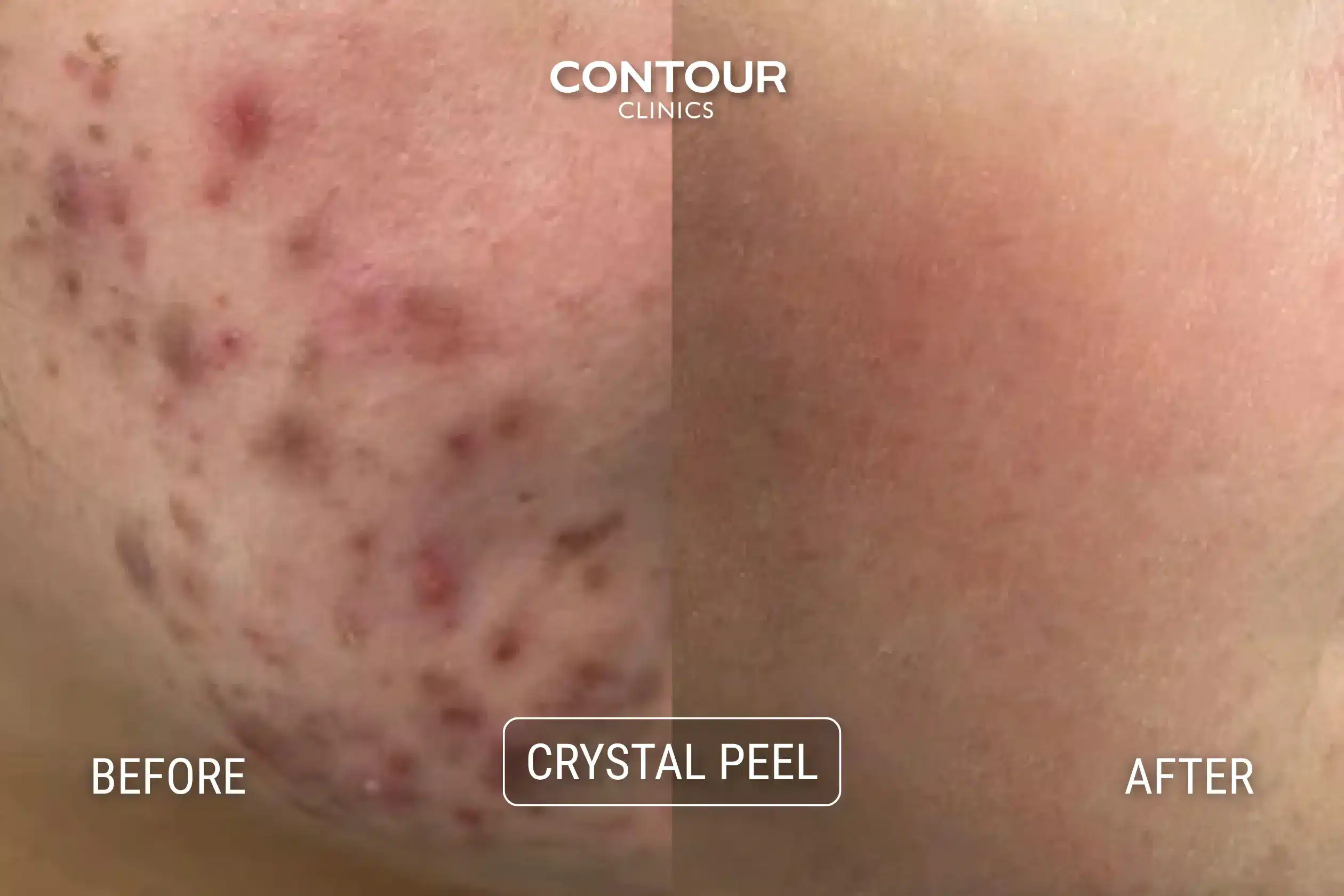
Who Is Crystal Peel Suitable For?
A chemical peel for pigmentation, Crystal Peel is generally suitable for all skin types and phototypes, once assessed by your Skin & Laser Therapist.
It may not be appropriate if you have an active skin infection, a compromised skin barrier, open wounds, have recently used isotretinoin, have known allergies to peel ingredients, or are pregnant or breastfeeding (assessed on an individual and clinic basis). There is also a risk of pigmentation changes if aftercare guidance isn’t followed closely, which is why ongoing sun protection is emphasised throughout your recovery.
What causes post-inflammatory hyperpigmentation?
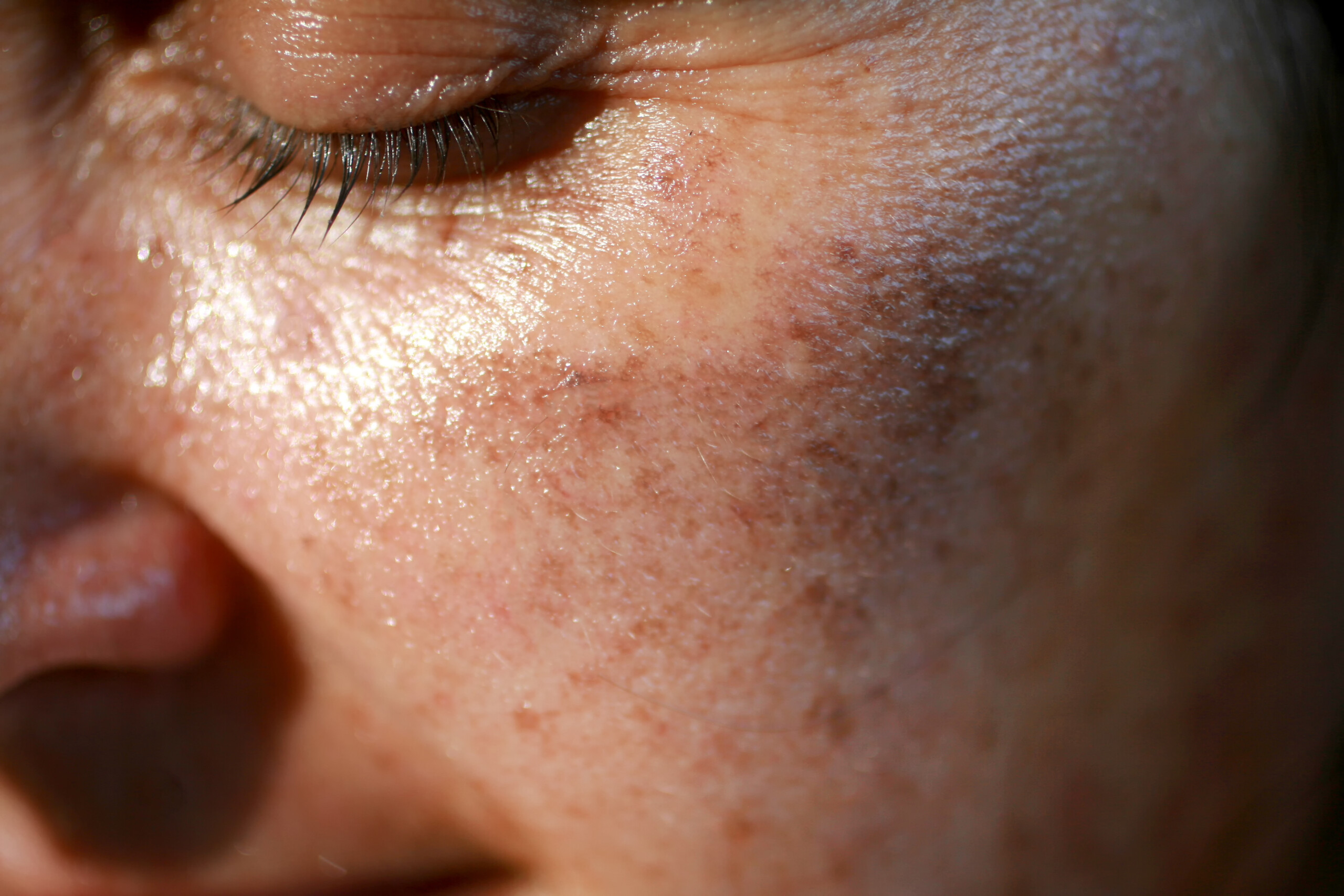
Post-inflammatory hyperpigmentation develops when inflammation, such as from acne, an injury or irritation, triggers excess melanin production as the skin heals, leaving behind a darker mark. It can affect any skin tone and often fades gradually, though a Crystal Peel may help support this process.
What causes solar and senile lentigines (sun spots)?
Solar lentigines develop from cumulative sun exposure over time, while senile lentigines are associated with skin ageing more broadly. Both involve localised overproduction of melanin, appearing as flat, darker patches typically on sun-exposed areas.
What is hyperkeratosis?
Hyperkeratosis refers to a thickening of the outer layer of skin, which can create a rough or uneven texture. Crystal Peel’s exfoliating action is one option that may help improve this.
How does a chemical peel like Crystal Peel differ from laser treatment for pigmentation?
Chemical peels work by exfoliating pigmented skin cells at the surface, while lasers such as IPL or Q-Switch target pigment using light energy beneath the surface. Both are genuine options for pigmentation, and which is more appropriate depends on the type, depth and cause of your pigmentation. Your Skin & Laser Therapist can talk you through the options during a consultation.
What should I look for in a chemical peel for dark spots and hyperpigmentation?
The right peel depends on the type and depth of your pigmentation. Superficial peels like Crystal Peel are often suited to post-inflammatory pigmentation, sun spots and melasma, while deeper concerns may call for a more intensive option. Your Skin & Laser Therapist will assess your pigmentation and recommend an appropriate treatment during consultation
Are chemical peels safe for darker skin tones with hyperpigmentation?
Suitability depends on the depth and strength of the peel. Superficial peels, such as Crystal Peel, generally carry a lower risk of pigment changes in darker skin tones than deeper peels, which can increase the risk of post-inflammatory hyperpigmentation if not carefully selected. A thorough assessment by your Skin & Laser Therapist is essential before any peel, particularly for darker skin tones.
Can chemical peels make pigmentation worse?
Yes, this is a genuine risk if the wrong strength of peel is used, aftercare isn’t followed closely, or sun protection is neglected during recovery. This is why a proper skin assessment beforehand and strict aftercare guidance afterwards are essential parts of any peel treatment at Contour Clinics.
Glycolic, salicylic and TCA acids: how do they differ for treating dark spots?
Glycolic acid is a small-molecule AHA that penetrates quickly and evenly. Salicylic acid is oil-soluble, making it well suited to congested or oily skin. TCA works at a deeper level, making it more suited to persistent or deeper pigmentation.
Crystal Peel combines salicylic acid with mandelic and citric acids, while Cosmo Peel uses TCA at varying strengths.