
Skip to Content Skip to Navigation

The Blog Receding Hairline: Early Signs, Causes and What You Can Do

Medically reviewed by: Mary Chigwidden, Senior Cosmetic Nurse, 25 October 2026

In brief:

  • A receding hairline usually starts at the temples and moves back gradually, often over several years
  • A mature hairline is a small, even shift that most men go through – a receding hairline keeps moving
  • Genetics and hormones are the most common drivers, but stress, nutrition and styling habits can play a part
  • Change can often be managed when it’s assessed early, while follicles along the hairline are still active

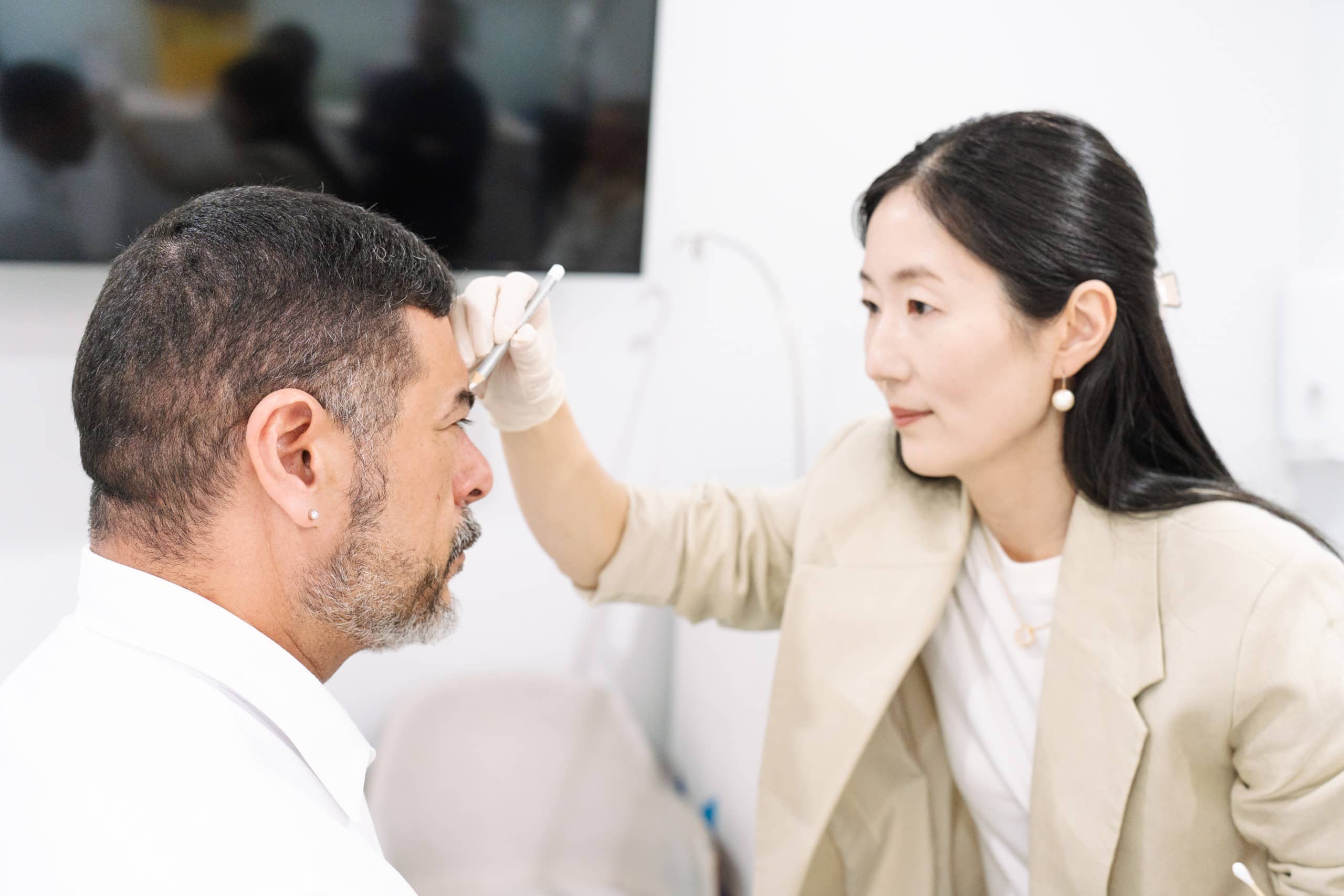
A receding hairline is when the hair at the front of the scalp gradually moves back, usually starting at the temples. It’s one of the most common hair changes in men and often begins earlier than people expect. For many, the first sign shows up in a photo or under bright bathroom light. At Contour Clinics in Sydney and Brisbane, a hair assessment can help you understand whether your hairline is receding or simply maturing.


What does a receding hairline look like. webp

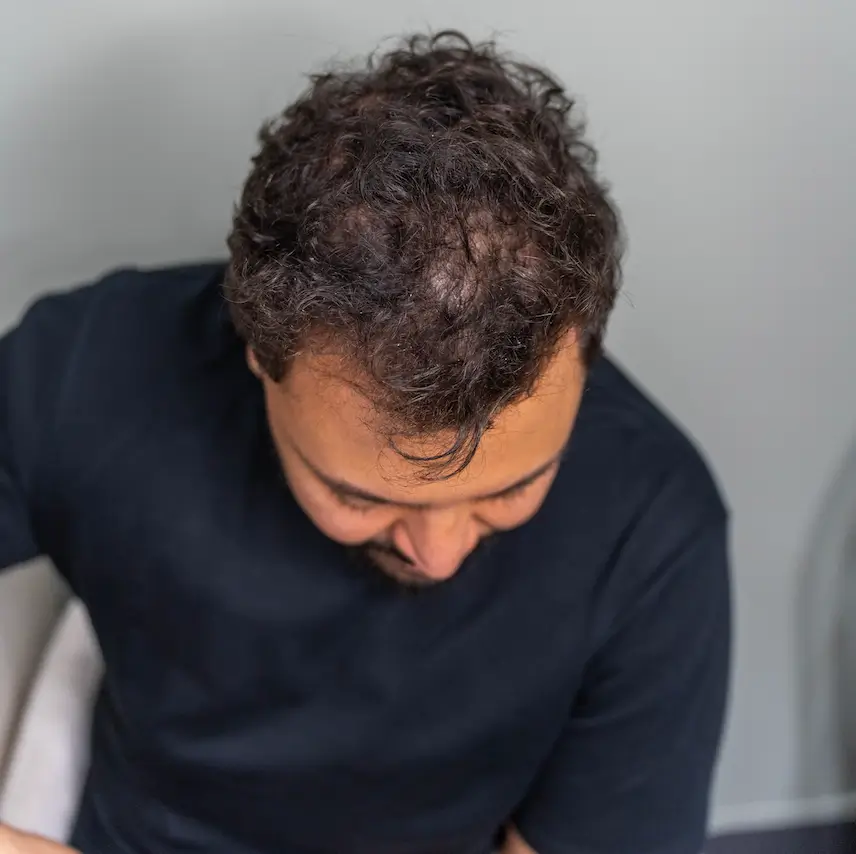
What does a receding hairline look like in the early stages?

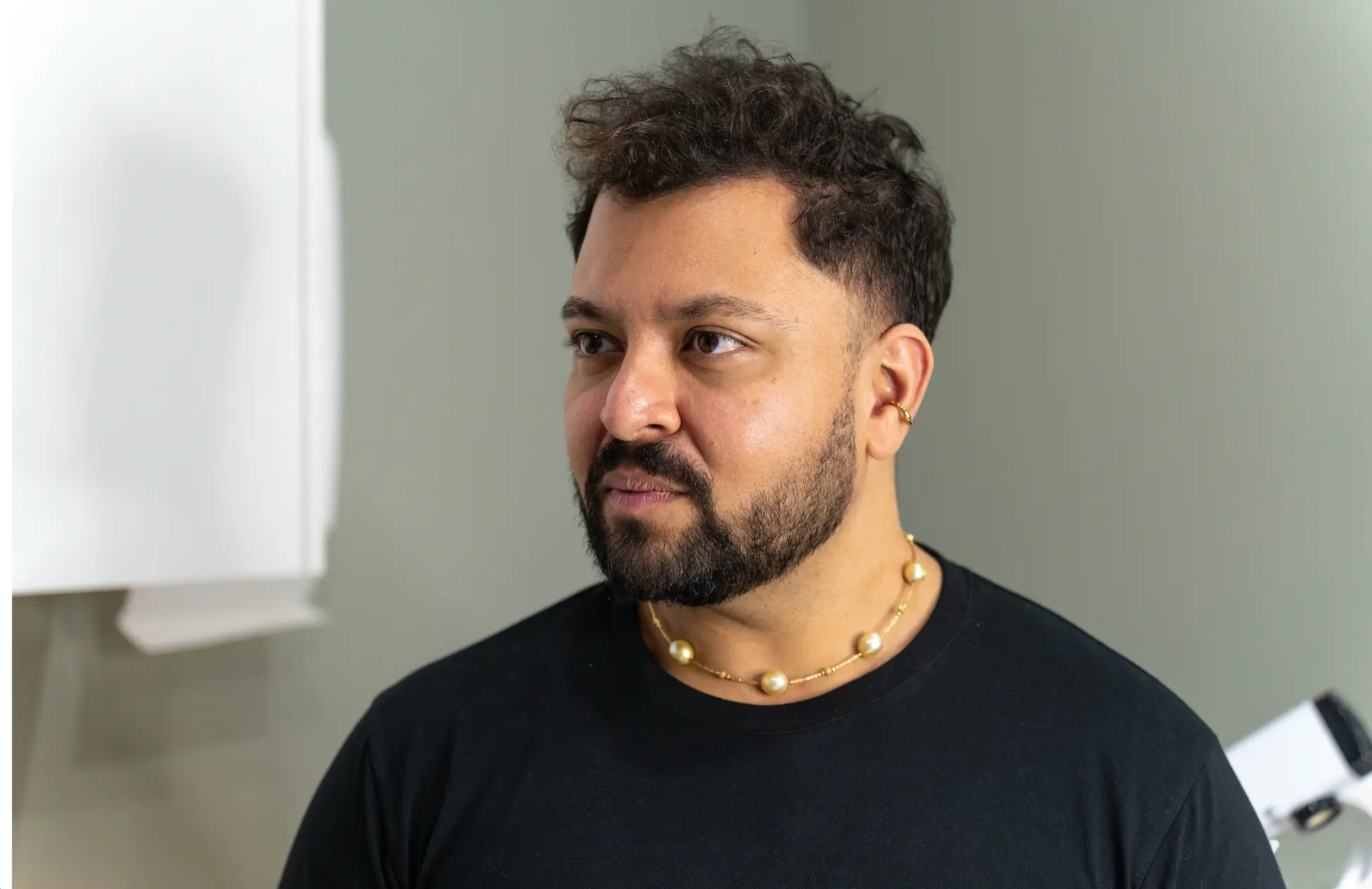
In the early stages, a receding hairline usually shows as the hair at the temples moving back while the centre stays in place. Over time, this can create an M or V shape along the front of the scalp. Because the change is gradual, it’s easy to miss in the mirror. A few simple checks can make it clearer.

How to check your hairline at home

  1. Pull your hair back: brush or tie your hair off your forehead and look at your temples straight on in a mirror. Compare how far back each corner sits against the centre of your hairline.
  2. Compare the front with the back: look closely at the hairs right along your hairline, then at the hairs at the back and sides of your head. In hereditary recession, the back and sides are usually less affected. Hairs at the front that look shorter, finer or more see-through than those at the back can be an early sign.
  3. Look at older photos: find a front-on photo from a year or two ago, taken in similar light. Changes at the temples are often easier to see side by side than day to day.
  4. Check under overhead light: bright overhead light or a camera flash shows the scalp through thinner hair more clearly than soft light from the side.

These checks can’t tell you what’s causing the change. They can help you decide whether your hairline is worth having assessed.

“In clinic, we see men and women who feel self-conscious about their hairline changing,” observes Mary Chigwidden, Senior Cosmetic Nurse. “For men, it’s often tied to age – a sense they’re looking more like an older relative than they used to. Many women notice it after childbirth, particularly around the temples. For some, it’s the shock of seeing that classic M shape form along the hairline, temples sitting higher or more scalp becoming visible. Whether it’s a mature hairline or a receding hairline is what we work out in your consultation.”

Mature hairline vs receding hairline what's the difference?

Mature hairline vs receding hairline: what's the difference?

A mature hairline is a small, even change that happens as the face matures, usually from the late teens into the twenties. A receding hairline keeps moving back over time and is often uneven, starting at the temples. The main difference is whether the hairline settles or continues to change.

Mature hairline Receding hairline
How far it moves A small shift, then it settles Keeps moving back over months or years
Shape Stays fairly even across the front Often forms an M or V shape at the temples
Hair quality Hairs along the front stay similar in thickness Hairs along the front may become finer and shorter
When it happens Usually late teens to twenties Can start in the late teens or twenties and continue later
Over time Stable once it’s settled Progresses, sometimes alongside thinning at the crown


It can be hard to tell the two apart on your own, especially early on. Comparing photos taken a year or more apart is often the clearest guide.

What are the stages of a receding hairline?

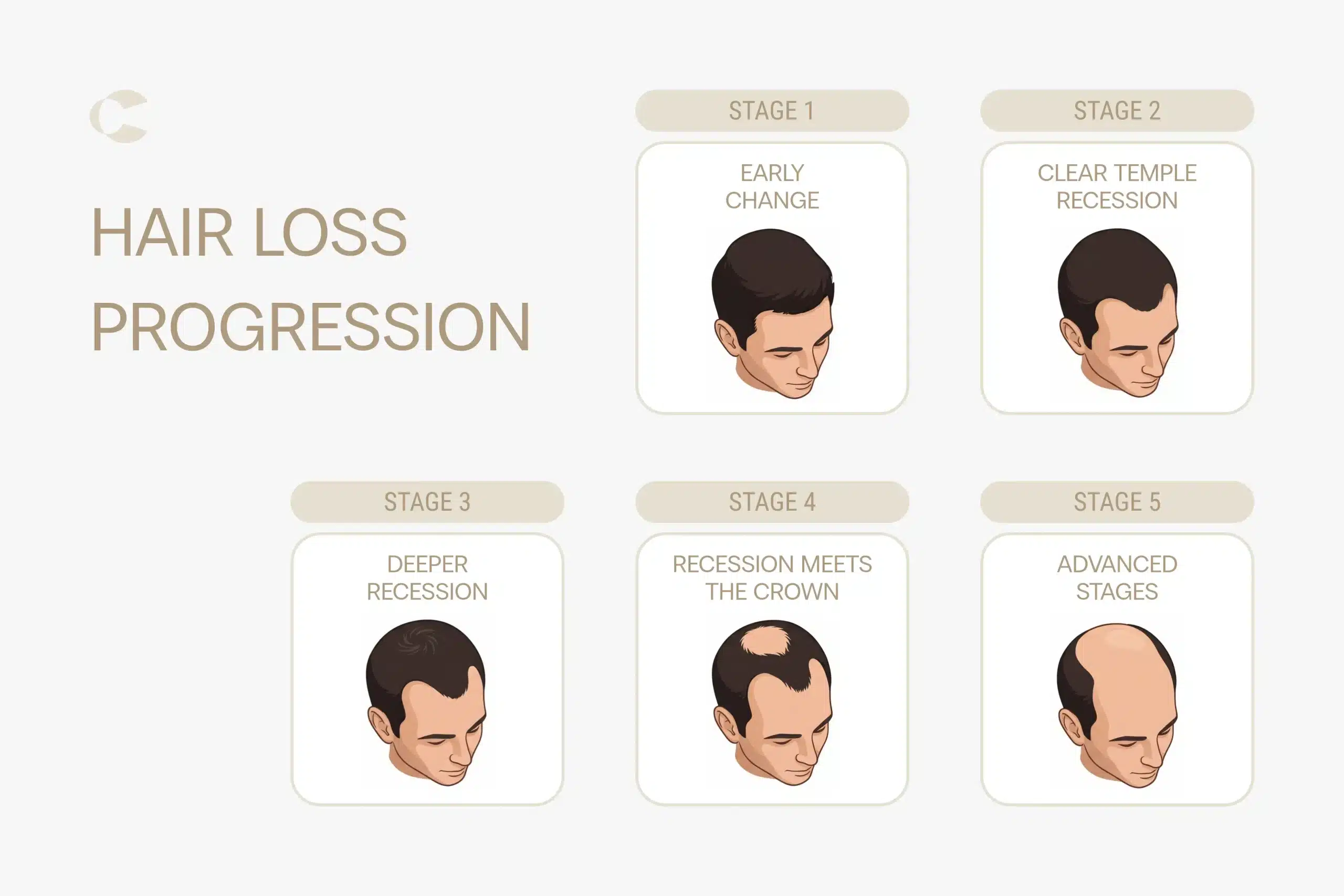
A receding hairline usually progresses in stages, from slight changes at the temples to recession that meets thinning at the crown. Practitioners often describe hereditary hair loss in men using the Norwood scale, which maps these stages from one to seven. Not everyone moves through every stage. The pace varies from person to person.

In broad terms, the stages look like this:

  1. Early change: the hairline shifts slightly at the temples. This can be hard to separate from a mature hairline.
  2. Clear temple recession: the corners move back further, creating a visible M or V shape
  3. Deeper recession: the temples recede further. Some people also start to see thinning at the crown
  4. Recession meets the crown: the front and crown thin more noticeably. The band of hair between them gradually narrows
  5. Advanced stages: most of the hair on top of the scalp is lost, leaving hair at the sides and back
What causes a receding hairline

What causes a receding hairline?

Most receding hairlines are hereditary, driven by genetics and the way hair follicles respond to hormones. In people with this sensitivity, a hormone called dihydrotestosterone (DHT), made from testosterone, gradually shrinks follicles at the temples and crown. Over time, those follicles produce shorter, finer hairs. Some stop producing visible hair altogether.

Other factors can contribute or make recession look more noticeable:

  • Age: hereditary recession can start in the late teens or twenties, then continue over the years
  • Family history: a pattern of hair loss on either side of the family can make it more likely
  • Stress: periods of high stress are more often linked to temporary shedding, which can make an existing recession look more obvious
  • Nutrition and iron: low iron or nutritional gaps can affect the hair growth cycle
  • Thyroid function: an overactive or underactive thyroid can disrupt normal hair growth
  • Styling habits: tight styles that pull at the hairline can add tension over time

Because some of these are medical, a check-up with your GP is worthwhile, so factors such as low iron or thyroid changes can be picked up and managed.

Is my hairline receding, or is it something else

Is my hairline receding, or is it something else?

Not every change at the front of the scalp is hereditary recession. A few other patterns can look similar, which is one reason an assessment is useful before deciding on next steps.

  • Traction-related hair loss: ongoing tension on the hair can cause both thinning and a receding hairline over time. Common sources include hair extensions, tight ponytails, buns or braids and headwear that sits firmly against the hairline, including some religious or cultural head coverings. This usually shows along the edges where the tension sits, rather than in a clear M shape.
  • Temporary shedding: stress, illness or a big change in routine can trigger more hair falling out all over the scalp. If it’s more sudden shedding than gradual thinning, our blog on hair shedding and hair thinning explains the difference and what each may mean.
  • Autoimmune causes: some conditions, such as alopecia areata or frontal fibrosing alopecia, can affect the hairline. Patchy loss, redness, itch or scaling are worth checking with your GP or a dermatologist.

For a wider look at causes and options, see hair loss treatment at Contour Clinics.

Can you stop a receding hairline

Can you stop a receding hairline?

A hereditary receding hairline can’t be cured, but change can often be slowed or managed – particularly when it’s assessed early. Once a follicle has stopped producing hair altogether, it doesn’t usually return. That’s why timing matters more than any single product or habit.

Some everyday steps can support overall hair and scalp health:

  • Look after your general health: a balanced diet with enough iron and protein, plus regular check-ups with your GP
  • Manage stress where you can: it won’t change your genetics, but it can reduce shedding that makes recession look worse
  • Ease tension on the hairline: avoid tight styles or headwear that pull at the front of the scalp
  • Be gentle with hair care: limit harsh chemical treatments and high heat along the hairline
  • Track the change: regular photos give you, and your practitioner, a clearer picture of how fast it’s moving

These steps won’t reverse hereditary recession on their own. If your hairline is still moving, an assessment can help you understand which options may be suitable and what’s realistic for you.

While you’re working out next steps, a change of cut can make a real difference to how a receding hairline looks. Shorter styles, a textured fringe or a shorter cut on the sides can soften the contrast at the temples. A barber or hairdresser can suggest a style that suits your hairline and face shape.

Receding hairline treatment at Contour Clinics

Receding hairline treatment at Contour Clinics

Receding hairline treatment at Contour Clinics starts with a doctor-led assessment of your scalp, hairline and history. From there, your practitioner can talk you through options that may be suitable, including non-surgical treatments offered in clinic.

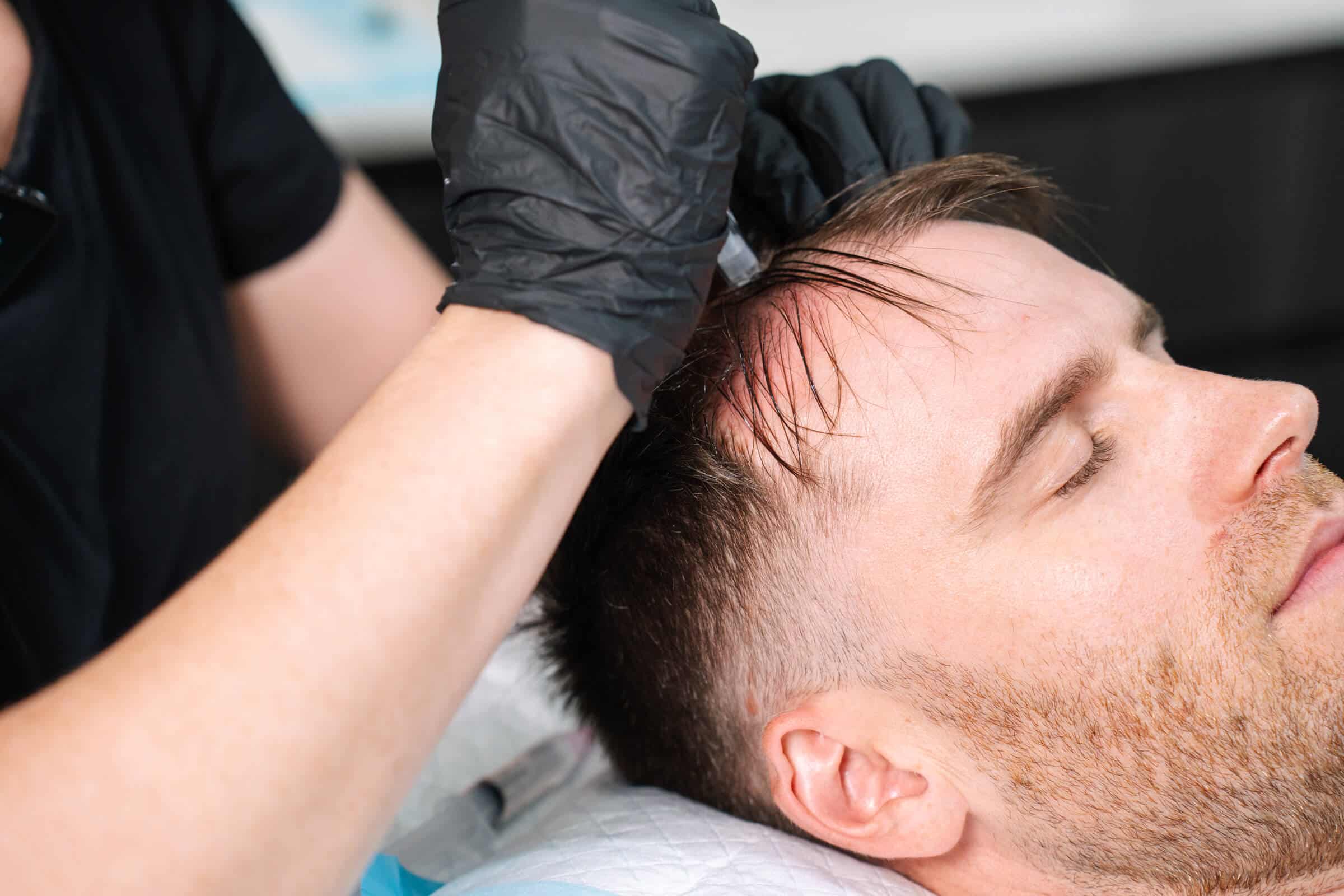
  • PRP hair treatment: platelet-rich plasma prepared from a small sample of your own blood, placed into the scalp where hair is thinning. 
  • Scalp microneedling with LED light therapy: a combined approach for early to moderate thinning where follicles are still active. 

Some medical options are only available after a doctor’s assessment. Your practitioner will discuss whether these may be relevant for you. 

Contour Clinics doesn’t offer hair transplants. If surgery is something you’re weighing up, your practitioner can explain where non-surgical options may or may not fit for you.

How to track your hairline

How to track your hairline (and when to book an assessment)

The simplest way to track a receding hairline is with regular photos taken the same way each time. Small changes are hard to judge day to day. Side-by-side photos a few months apart give you a far clearer picture.

To keep your photos consistent:

  • Use the same light: natural daylight or the same bathroom light each time
  • Keep the same angles: front-on, both temples and the top of the head
  • Style your hair the same way: ideally pulled back from the hairline, so the edge is easy to see
  • Take them on a schedule: every two to three months is enough to see a trend

It’s worth booking an assessment if:

  • Your hairline is still moving: photos show the temples sitting higher over several months
  • Hairs along the front are getting finer: this can be an early sign the follicles are changing
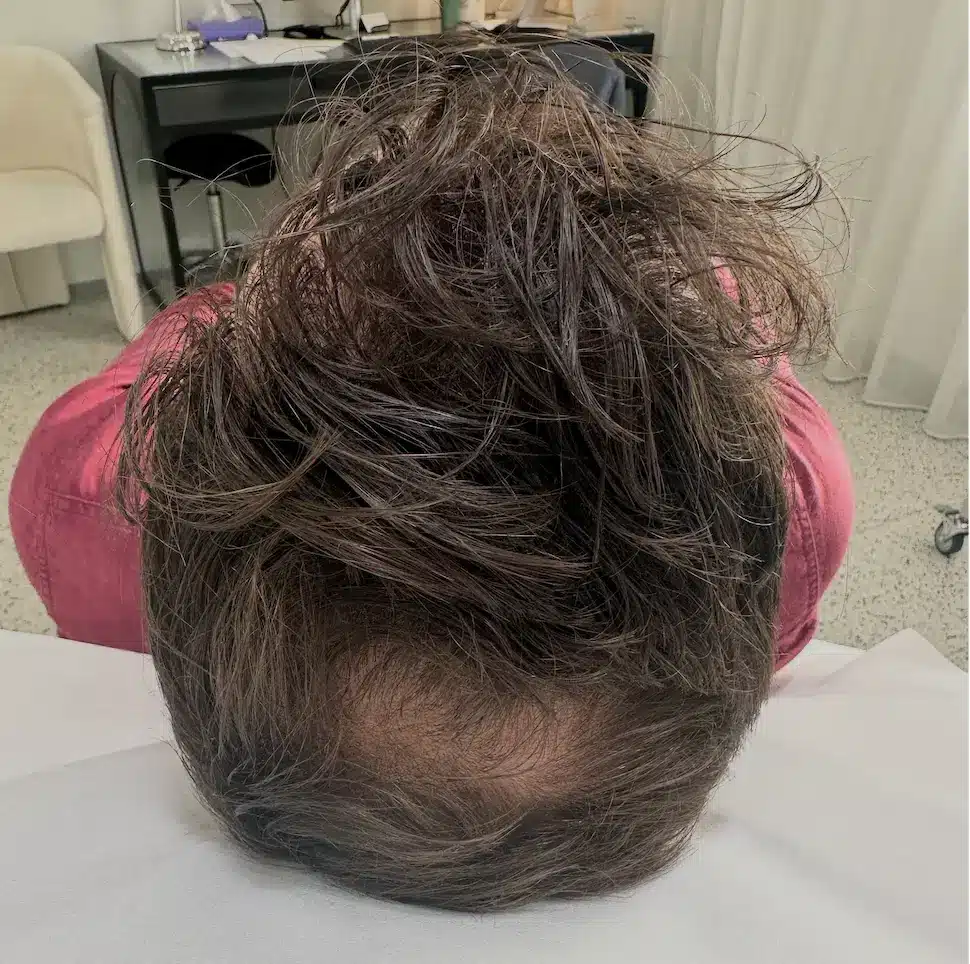
  • You’re seeing thinning at the crown too: recession at the front and crown together is worth a closer look
  • The change is patchy, itchy or red: see your GP or a dermatologist first, as this may point to another cause

Book a consultation

Results may vary between individuals and depend on personal goals, baseline characteristics, and responses to treatment. A consultation with a qualified medical professional is recommended to determine if this treatment is suitable for you.

Frequently Asked Questions

The Contour Medical Team

About The Contour Medical Team

This article has been prepared for general informational purposes only. It does not constitute medical advice, diagnosis, or a treatment recommendation. Suitability for any cosmetic treatment varies between individuals and should be assessed in a 1:1 consultation with a qualified practitioner. If you have questions about your specific situation, we encourage you to book a consultation or contact our team directly.

Are You Ready?

Book Now

Ready to book? Still have questions? Leave us a message and we will get back to you as soon as possible.


or call us on 1300 233 803