Skip to Content Skip to Navigation

The Blog Hair shedding or hair thinning? What your hair is telling you

Medically reviewed by: Mary Chigwidden, Senior Cosmetic Nurse, 25 October 2026

In brief:

  • Each hair moves through its own growth, transition and resting phases before it falls out and a new hair begins to grow in its place
  • Most people lose 50–100 hairs a day as part of this natural cycle
  • Shedding is more hairs than usual reaching the end of the cycle at once
  • Thinning is a gradual change in how much hair covers the scalp, often in a recognisable pattern
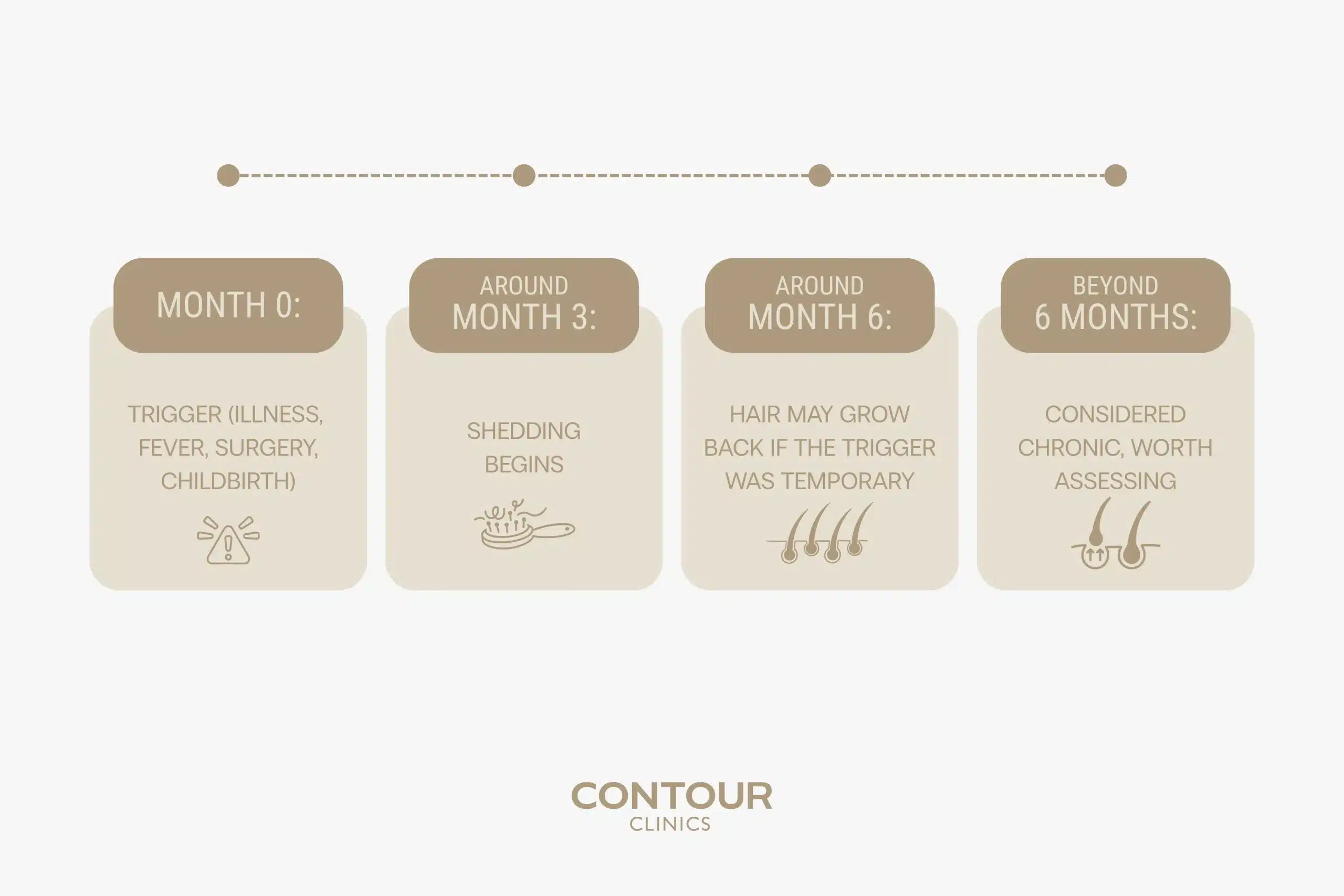
  • A sudden increase in shedding usually begins around three months after a trigger such as illness, fever, surgery or childbirth, which is why the cause isn’t always obvious
PRP Hair Loss Treatment Sydney

Is hair shedding a normal part of natural growth?

Even if you don’t notice it, hair is always moving through a cycle of growing, resting and shedding. Finding strands on your pillow, in your brush or clogging up the shower drain is a reflection of your scalp renewing itself. 

What usually prompts questions in our cosmetic clinics about hair loss is a change – more hair coming out than usual or a parting or crown that looks less full than it did. Knowing where your hair sits in its growth cycle is often the first step in making sense of it.

Below, our medical team explains how the hair growth cycle works, how much daily shedding is typical, what can trigger more and when it’s worth having your hair and scalp assessed.

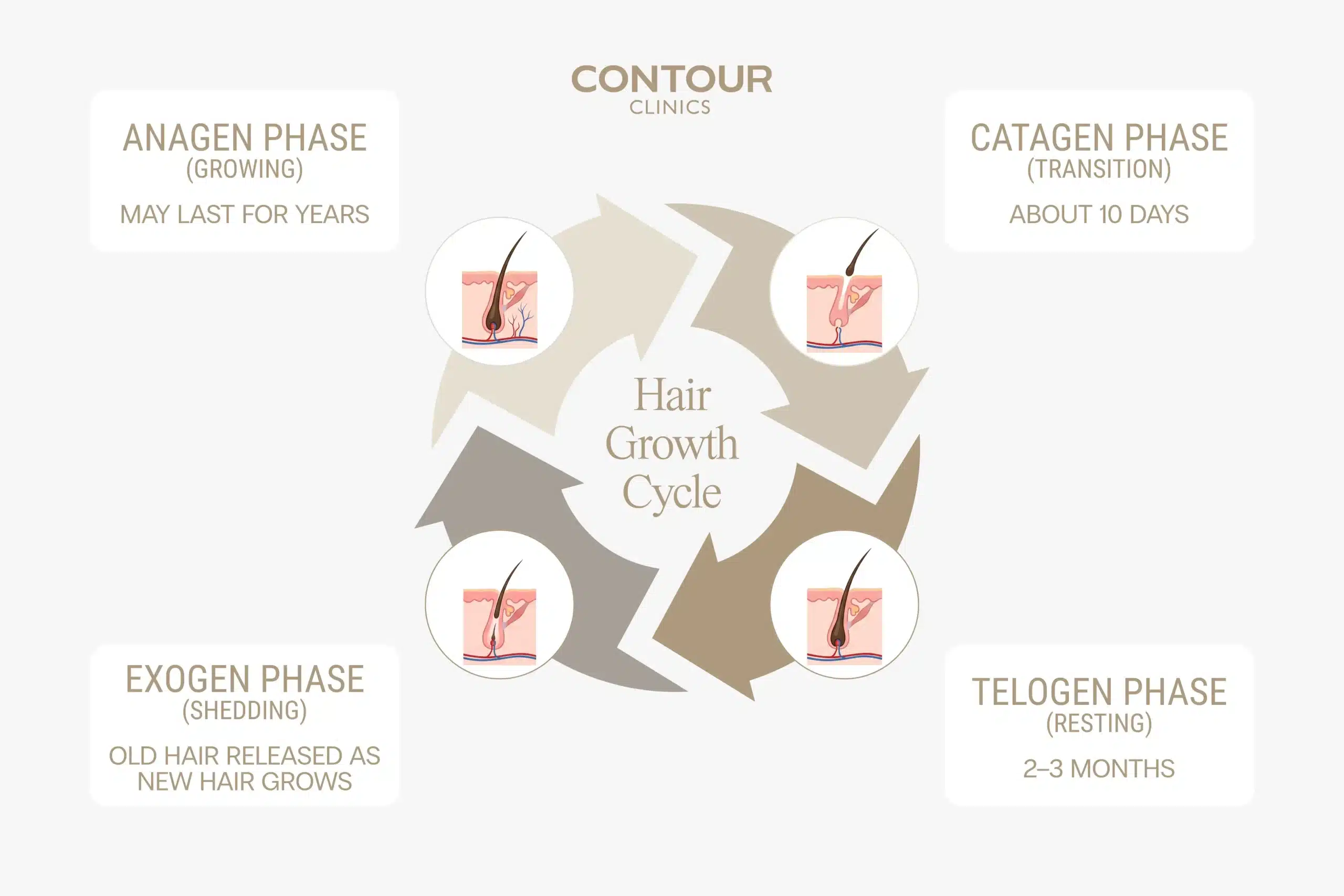
Graphic showing stages of the hair growth cycle with Anagen, Catagen, Telogen and Exogen phases shown in a circular shape

What are the stages of the hair growth cycle?

The hair growth cycle has four phases: anagen, when hair actively grows; catagen, a short transition; telogen, a resting phase; and exogen, when the old hair is released and falls out. On average, the scalp has around 100,000 hairs, each moving through this cycle on its own timeline. That’s why some shedding happens every day.

Phase What happens Typical length
Anagen (growth) Hair actively grows from the follicle May last for years
Catagen (transition) Hair stops growing and separates from its follicle – the structure that holds the hair in place About 10 days
Telogen (resting) The follicle rests, then the hair falls out. The next anagen phase begins as a new hair grows in the same follicle 2–3 months
Exogen (shedding) The old hair is released and falls out, usually as a new hair begins growing in the same follicle Varies – often overlaps with new growth

When this cycle is disrupted, or a follicle is damaged, hair can begin to fall out faster than it’s replaced. Depending on the cause, that may show up as a receding hairline, hair falling out in patches or overall thinning.

How much hair loss is normal in a day

How much hair loss is normal in a day?

Most people lose 50–100 hairs a day as part of the natural hair growth cycle, as resting hairs fall out and new hairs begin growing in the same follicles. But a daily count isn’t the whole picture. A change from what’s usual for you specifically – or hair loss that’s patchy rather than spread across the scalp – tells your practitioner more than a number does. 

“Some daily hair loss is normal,” says Lauren Hirschfield, Senior Cosmetic Nurse at Contour Clinics. “But ‘normal’ is different for everyone. If you’re going to start counting it you need to get a baseline and monitor it. And for females going through hormonal changes, consider getting your blood and iron levels checked,” she recommends.  

When large numbers of follicles enter the resting phase at the same time, shedding can rise well above the usual range. In telogen effluvium, for example, some people lose 300–500 hairs a day.

The difference between hair shedding and hair thinning

What's the difference between hair shedding and hair thinning?

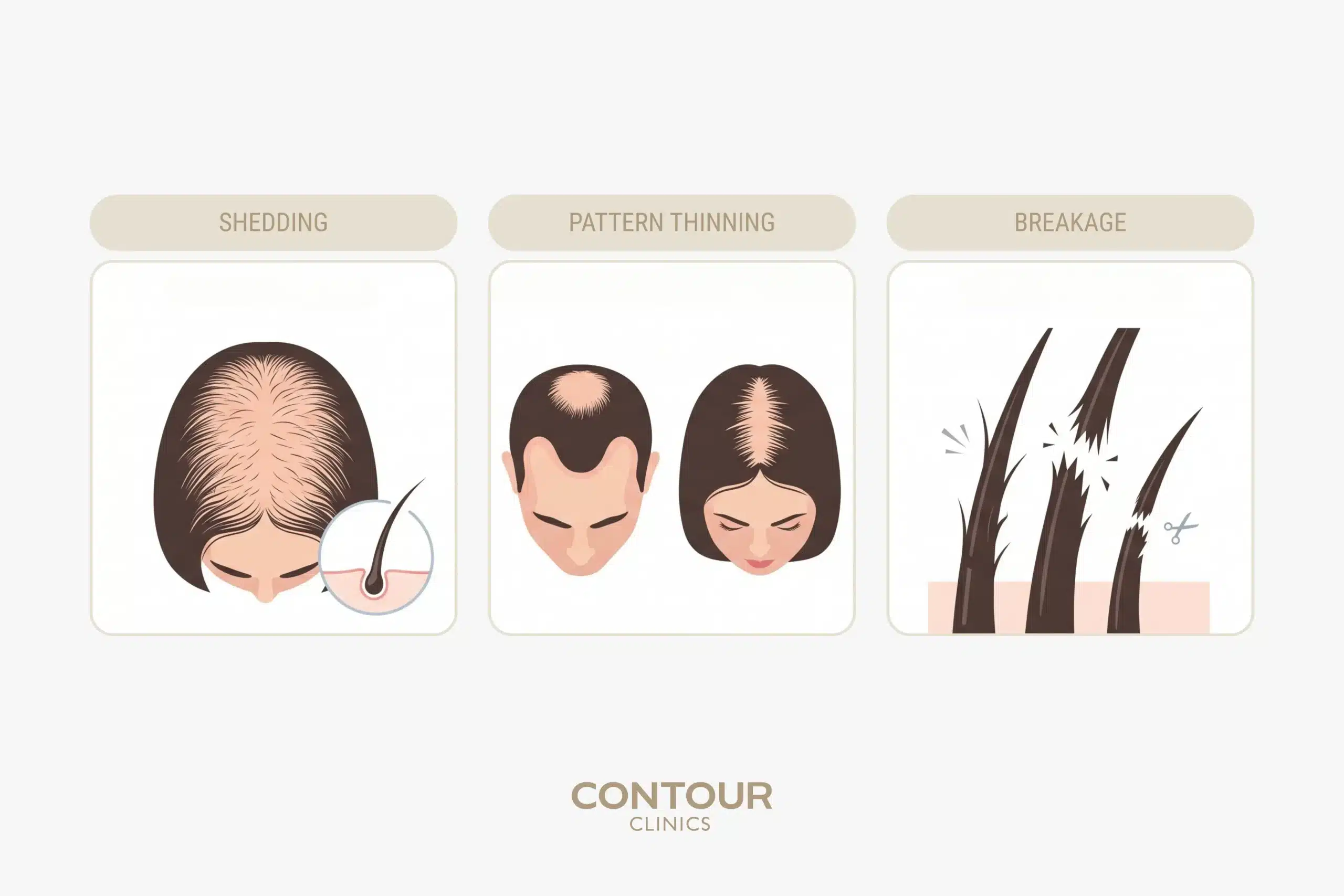
Hair shedding means more hairs than usual are reaching the end of their cycle and falling out, often from all over the scalp.

Hair thinning is a gradual reduction in how much hair covers the scalp. It usually follows a pattern. 

The two can overlap, but they tend to have different causes which is why telling them apart is an important part of any assessment. In medical terms, this is often the difference between telogen effluvium, a common cause of sudden shedding, and androgenetic alopecia, the hereditary pattern thinning covered below.

Shedding Pattern thinning Breakage
How it starts Suddenly, often around three months after a trigger Gradually, over months or years Linked to how hair is styled and treated, rather than the growth cycle
Where it shows Often all over the scalp – may look thinner at the crown and temples Men: above the temples, then around the top of the head. 

Women: all over the top of the scalp, with the hairline usually staying in place

An overall thinner look
What the hair looks like Whole hairs released at the follicle Less dense coverage in a recognisable pattern Many short, brittle hairs snapped along the strand
Common causes Illness, fever, surgery, childbirth, thyroid imbalance, nutritional deficiencies or certain medications Hereditary androgenetic alopecia Long-term perming, relaxing and other chemical treatments
What usually happens next Hair may grow back after around six months if the trigger is temporary Tends to progress over years or decades Simple changes to styling and hair care can reverse some causes

If what you’re worried about is a more gradual change in density than a sudden increase in shedding, our Hair Loss page explains the options that may be discussed in a consultation.

Lauren Hirschfield, Senior Cosmetic Nurse explains what can trigger a sudden increase in shedding

What can trigger a sudden increase in shedding?

A sudden increase in shedding is often linked to telogen effluvium. This happens when large numbers of follicles enter the resting phase but the next growth phase doesn’t begin. It’s typically triggered by a medical event or condition and usually starts around three months afterwards. That delay is why the trigger isn’t always obvious.

Common triggers include:

  • Illness, fever or surgery
  • Pregnancy and childbirth
  • Thyroid imbalance
  • Deficiency in iron, zinc, biotin or protein – iron deficiency is a common cause of hair loss in women
  • Starting or stopping certain medications

“When we trace hair loss back to a cause, the triggers we see most often at Contour are a combination of genetics, hormonal changes and lifestyle. Postpartum and menopause are common hormonal triggers. Lifestyle factors like regular heavy drinking without good nutrition play a part too,” says Lauren. 

Telogen effluvium doesn’t generally lead to complete baldness, although hair may appear thin, especially at the crown and temples. Other major life stresses, such as grief, divorce or family illness, are also among the potential causes of hair loss.

Hair shedding timeline

What should you think back to when hair starts shedding?

Because shedding linked to telogen effluvium usually starts around three months after its trigger, the cause is often easier to find by looking back than by looking at what’s happening now. Before your consultation, it can help to think back around three months for:

  • An illness, fever or surgery
  • Pregnancy or childbirth
  • Starting or stopping a medication
  • A period when your diet may have been low in iron, zinc, biotin or protein
  • A time of major stress, such as grief, divorce or family illness

Noting rough dates gives your practitioner a clearer starting point. If nothing stands out, or shedding has lasted longer than six months, that’s useful to share too.

Does hair grow back after shedding?

Does hair grow back after shedding?

If the trigger is temporary – for example, recovering from an illness – hair may grow back after around six months. Shedding that lasts longer than six months is considered chronic. It’s worth having assessed, as an ongoing or underlying cause may be involved.

Some hair loss linked to habits also tends to improve once the cause changes. With traction alopecia, caused by hairstyles such as tight ponytails and braids, hair regrows most of the time after the hairstyle is changed.

Not all hair loss behaves this way. In scarring alopecia, inflammation destroys hair follicles and scar tissue forms in their place. After scar tissue forms, hair doesn’t regrow – which is why scalp symptoms such as itching, swelling or red or white patches are worth raising early.

Hair Shedding or Hair Thinning? How the Hair Growth Cycle Explains the Difference

What are the common patterns of hair thinning?

The most common type of hair loss is androgenetic alopecia, commonly known as male pattern or female pattern hair loss. It’s hereditary and develops gradually, although it can begin any time after puberty. The pattern tends to look different in men and women.

Male pattern hair loss: usually starts above the temples and continues around the perimeter and top of the head over years or decades. It often leaves a ring of hair along the bottom of the scalp. 

Female pattern hair loss: hair slowly thins all over the scalp, but the hairline usually doesn’t recede. Many women experience it as a natural part of ageing. It can cause hair to thin noticeably, but only rarely leads to baldness.

Patchy hair loss: in alopecia areata, an autoimmune condition, hair typically falls out in small patches that aren’t painful. It can begin suddenly. Hair in other areas, including the eyebrows and eyelashes, may also fall out.

Ways to Address Smoker Lines in Sydney & Brisbane

When should you get hair loss checked?

It’s worth having hair loss checked if it starts suddenly, comes out in patches or comes with scalp or whole-body symptoms, as these can point to an underlying cause.

Before considering specific hair restoration treatments, it’s essential to first rule out common secondary factors that could be contributing to your hair loss, including:

  • Nutritional deficiencies (e.g. iron, vitamin D)
  • Hormonal imbalances (thyroid disorders, androgen excess)
  • Autoimmune conditions (alopecia areata)
  • Medication side effects
  • Scalp infections or dermatological conditions

Signs that hair loss might have a secondary underlying cause include:

  • Sudden onset or rapid progression of hair thinning
  • Patchy or irregular hair loss, rather than a uniform pattern
  • Accompanying scalp symptoms, such as redness, itching, flaking or tenderness
  • Systemic symptoms, including fatigue, weight changes, irregular menstrual cycles or temperature sensitivity
  • Recent initiation or discontinuation of medications
  • Hair loss coinciding with significant physical or emotional stress
  • Brittle, dull hair that breaks easily, potentially indicating nutritional deficiencies
  • Hair loss in atypical areas, such as eyebrows, eyelashes or body hair
  • Family history or personal history of autoimmune or endocrine disorders

Identifying these signs early can guide you toward addressing the root cause. Your Contour Clinics practitioner will explore your pattern of hair loss and recommend further investigation if required, along with a treatment plan that suits your unique baseline hair characteristics and goals of treatment.

Dr Jamie Addlestone is a Cosmetic Doctor

What happens in a hair loss consultation?

A hair loss consultation (and treatment, if suitable) at Contour Clinics starts with understanding what’s behind the change in your hair before any treatment is discussed. Your practitioner looks at the whole picture – timing, pattern, health history and recent life events – and recommends further investigation if required. Any options discussed are based on the likely cause rather than the symptom alone.

Depending on your assessment, options that may be discussed at Contour Clinics include PRP hair treatment and LED light therapy for hair loss.

“LED light therapy is typically used in combination with other treatments for hair, rather than on its own, and over a course of many months,” says Dr Jamie Addlestone, Cosmetic Doctor.

If your hair is shedding more than usual, thinning or breaking, a hair loss consultation (and treatment, if suitable) is the place to start. Book at one of our clinics in Bondi, Brisbane, Castle Hill, Crows Nest, Five Dock, Miranda, Narellan or Newtown.

The Contour Medical Team

About The Contour Medical Team

This article has been prepared for general informational purposes only. It does not constitute medical advice, diagnosis, or a treatment recommendation. Suitability for any cosmetic treatment varies between individuals and should be assessed in a 1:1 consultation with a qualified practitioner. If you have questions about your specific situation, we encourage you to book a consultation or contact our team directly.

Are You Ready?

Book Now

Ready to book? Still have questions? Leave us a message and we will get back to you as soon as possible.


or call us on 1300 233 803