Skip to Content Skip to Navigation

The Blog Ablative vs Non Ablative Laser: Key Differences, Benefits And Downtime

In brief

  • Ablative lasers remove tiny columns of the skin’s surface and heat deeper layers, aiming for more intensive resurfacing. Longer downtime and stricter aftercare. Often considered for deeper wrinkles, pronounced acne scarring and marked sun damage.
  • Non ablative lasers heat targeted columns in the deeper skin without removing the surface, aiming for gradual improvement in fine lines, texture and mild scars. Shorter, milder downtime over a series of treatments. Often recommended for early ageing, mild-moderate acne scars, pores, texture and selected pigment concerns.
  • The “best” choice? Depends on your skin, medical history and downtime tolerance. A doctor-led consultation is the safest way to decide what is right for you.


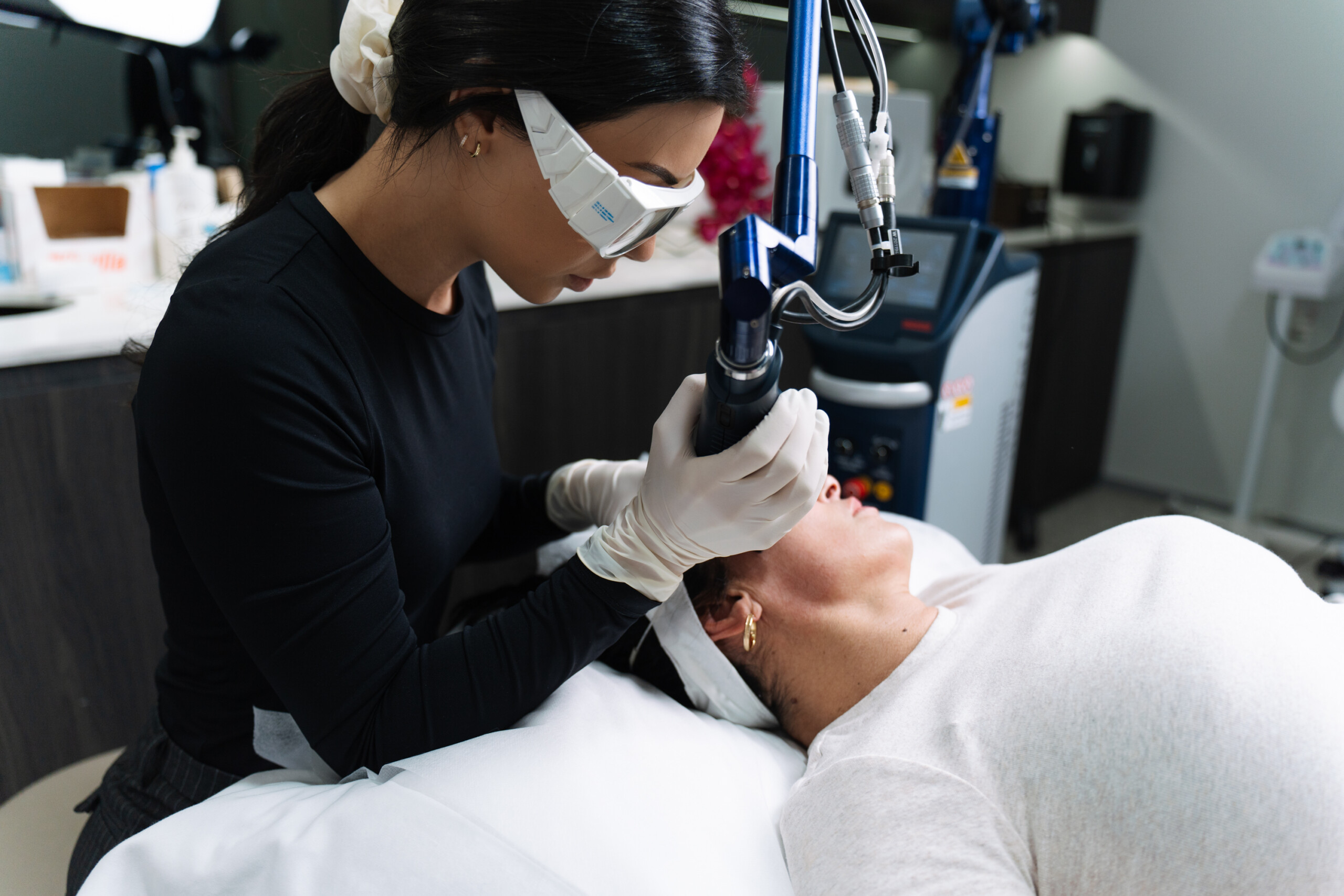
How Co2 Fractional Laser Works - explained by cosmetic doctors at Contour Clinics

The Language of Lasers

When you start researching laser skin treatments, it can feel overwhelming. They all seem to do similar (but different) things and have scientific terms: “Nd: YAG“, “fractional”, “short pulse.”

Beyond the jargon, most skin lasers fall into two main groups – ablative and non ablative. i.e Ablative removes the outer layers of skin. Non-ablative does not remove outer layers but works deeper.

In this article, when we compare ablative vs non ablative lasers, we are mainly talking about our resurfacing lasers – CO2 and Erbium (ablative) along with Q Switch and 1540 fractional non-ablative laser – because these are the devices that remodel skin texture most intensively. Other technologies like Laser Genesis, IPL and RF microneedling often sit around this as part of a broader treatment plan.

This guide answers the most common questions people ask about ablative vs non ablative lasers including differences, benefits, downtime, comfort and how each option may relate to concerns such as wrinkles and acne scars. 

Written by our medical team, it’s designed to help you clearly understand laser options and be prepared for your treatment, not to replace individual medical advice.

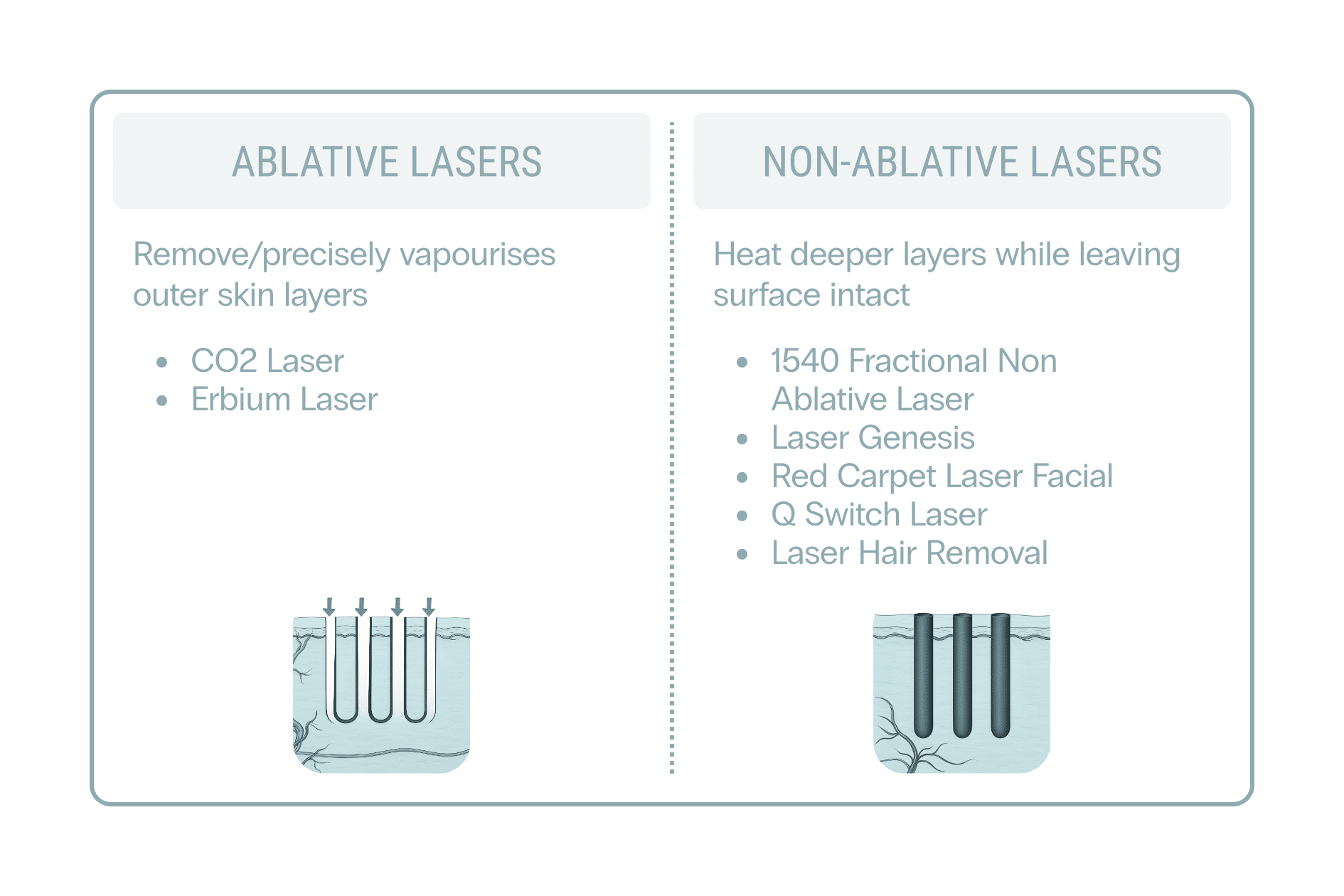
Table comparing Ablative-vs-Non ablative laser treatments by cosmetic doctors at Contour Clinics

What’s The Difference Between Ablative And Non Ablative Lasers?

In simple terms, the difference comes down to how they interact with the surface of your skin and what that means for downtime.

At Contour Clinics, we use a suite of medical grade lasers and energy based devices – CO2 and Erbium resurfacing, 1540 fractional non ablative laser, Laser Genesis and Q Switch – as well as IPL and RF microneedling.

Even though the brand names and wavelengths differ, almost all of these technologies sit in one of two families based on how they interact with the surface of your skin and downtime:

Ablative lasers

  • Remove tiny columns of the skin’s surface i.e ablates skin’s outer layers
    Create controlled micro channels from the top layer into the deeper layer
  • Tend to involve more noticeable downtime (think swelling, flaking, redness up to two weeks)
  • Often chosen for more advanced texture change and scarring in suitable skin types

Non ablative lasers

  • Deliver heat into the deeper skin without removing the surface i.e does not ablate outer skin layers
  • Leave the epidermis intact, creating controlled micro damage to deeper layers
  • Generally have milder, shorter downtime (think mild redness, swelling and dryness for a few days)
  • Often chosen for fine lines, mild scarring, pigment and early ageing changes

Both types of laser work by creating precise micro injuries that tell your skin to repair itself and stimulate collagen. The main difference is where that injury is created and how much downtime you can expect.

At Contour Clinics, our main resurfacing options are:

  • Ablative: CO2 Laser Resurfacing and Erbium Laser
  • Non ablative: 1540 Fractional Non Ablative Laser and Q Switch

Other non ablative devices, such as Laser Genesis and Red Carpet Laser Facial, are used for more specific goals like redness and pigment.

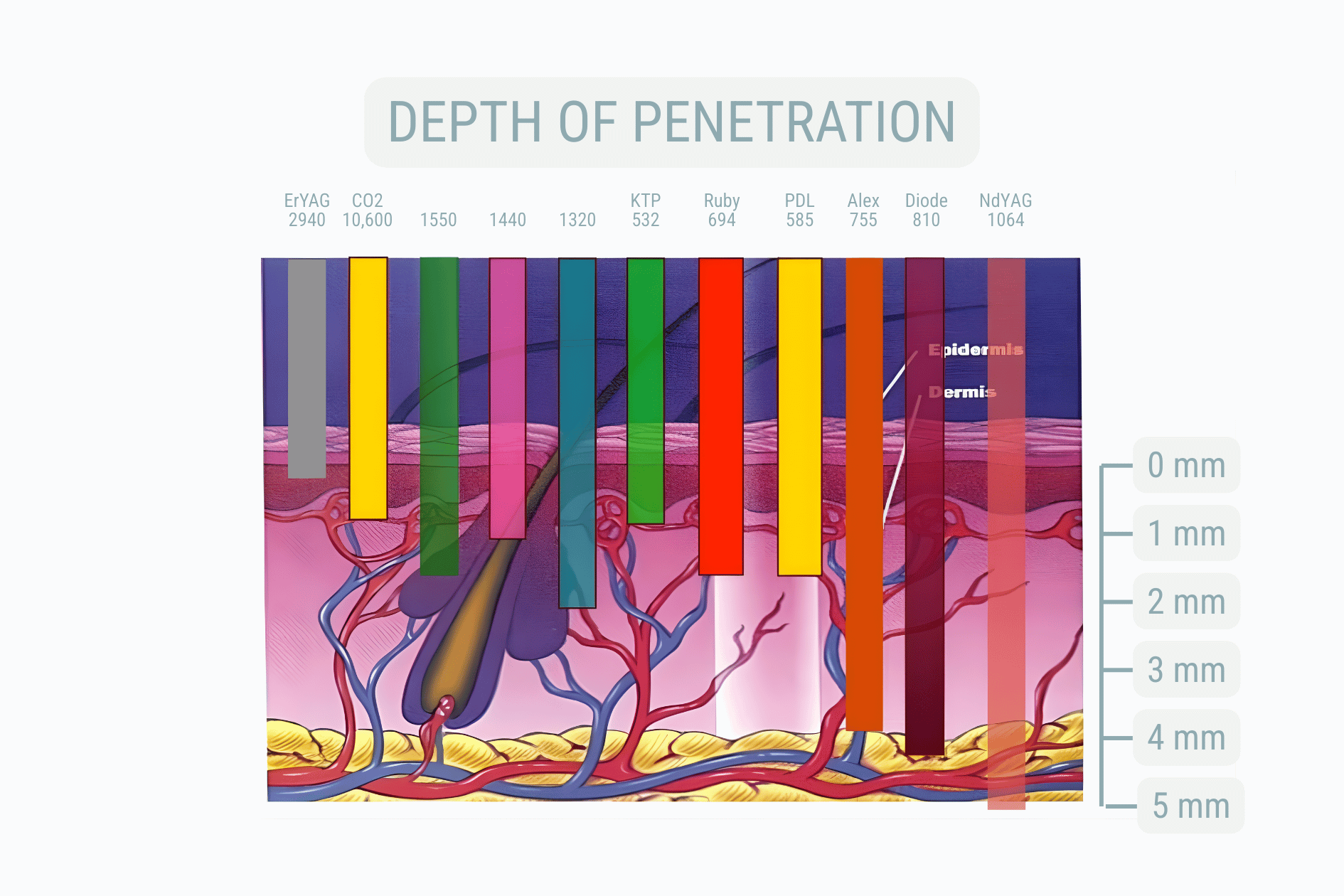
Laser penetration depth wavelength chart by cosmetic doctors at Contour Clinics

How Do Ablative And Non Ablative Lasers Work?

The two approaches differ in where the laser energy is directed and how much of the skin surface is disrupted in the process.

How Ablative Lasers Work

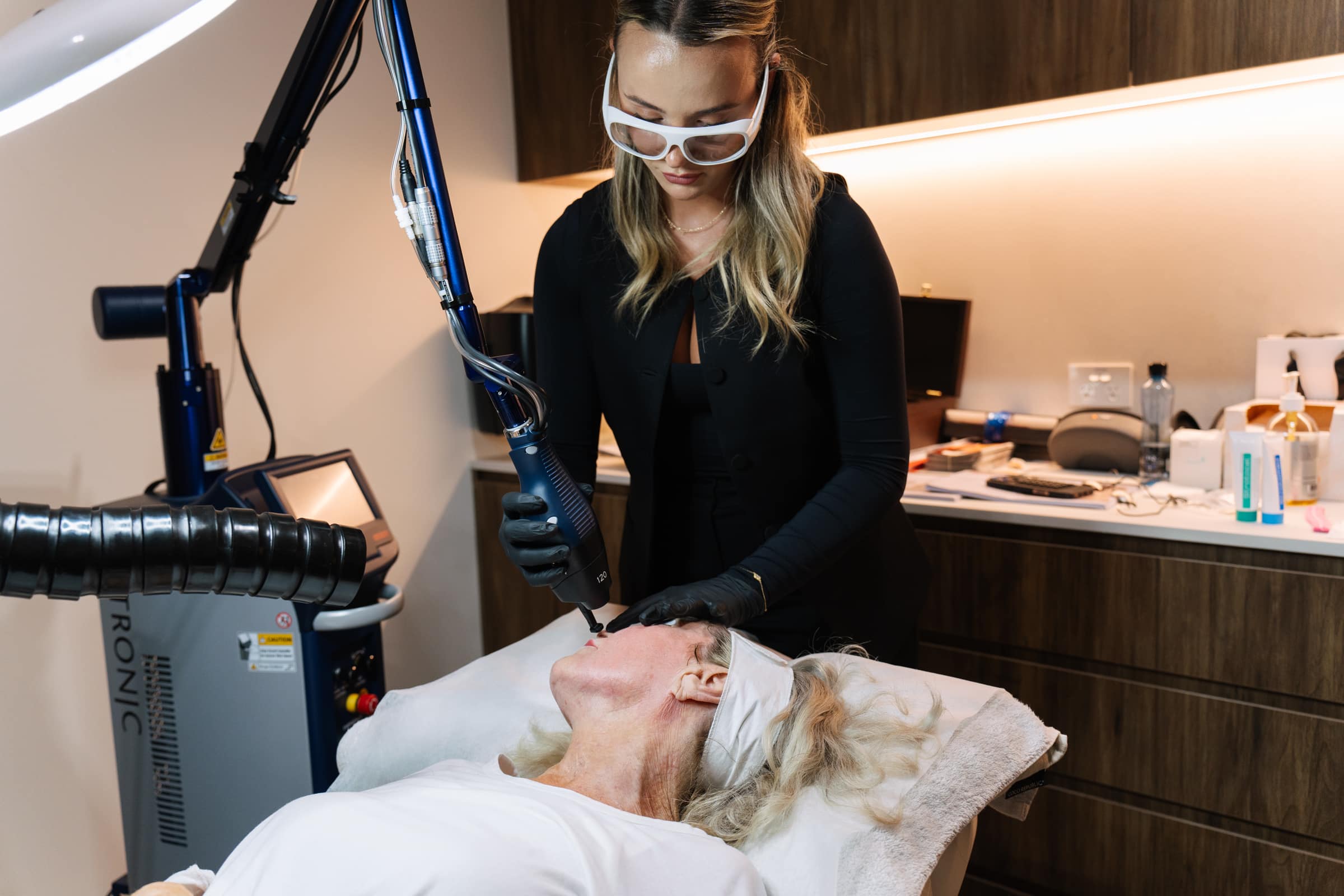
Ablative lasers are strongly attracted to water in the skin. Energy is delivered in a precise pattern, removing micro columns of the outer layer and heating the tissue just below. This creates tiny channels surrounded by a zone of heated tissue – a controlled stimulus for collagen production and skin renewal.

As your skin repairs those channels, it lays down new collagen and gradually smooths texture and softens lines. Because the surface is disrupted, ablative treatments involve more noticeable downtime: oozing, crusting and peeling before fresh skin appears underneath.

Ablative options like CO2 Laser Resurfacing and Erbium Laser are often used as part of a tailored laser skin resurfacing plan.

How Non Ablative Lasers Work

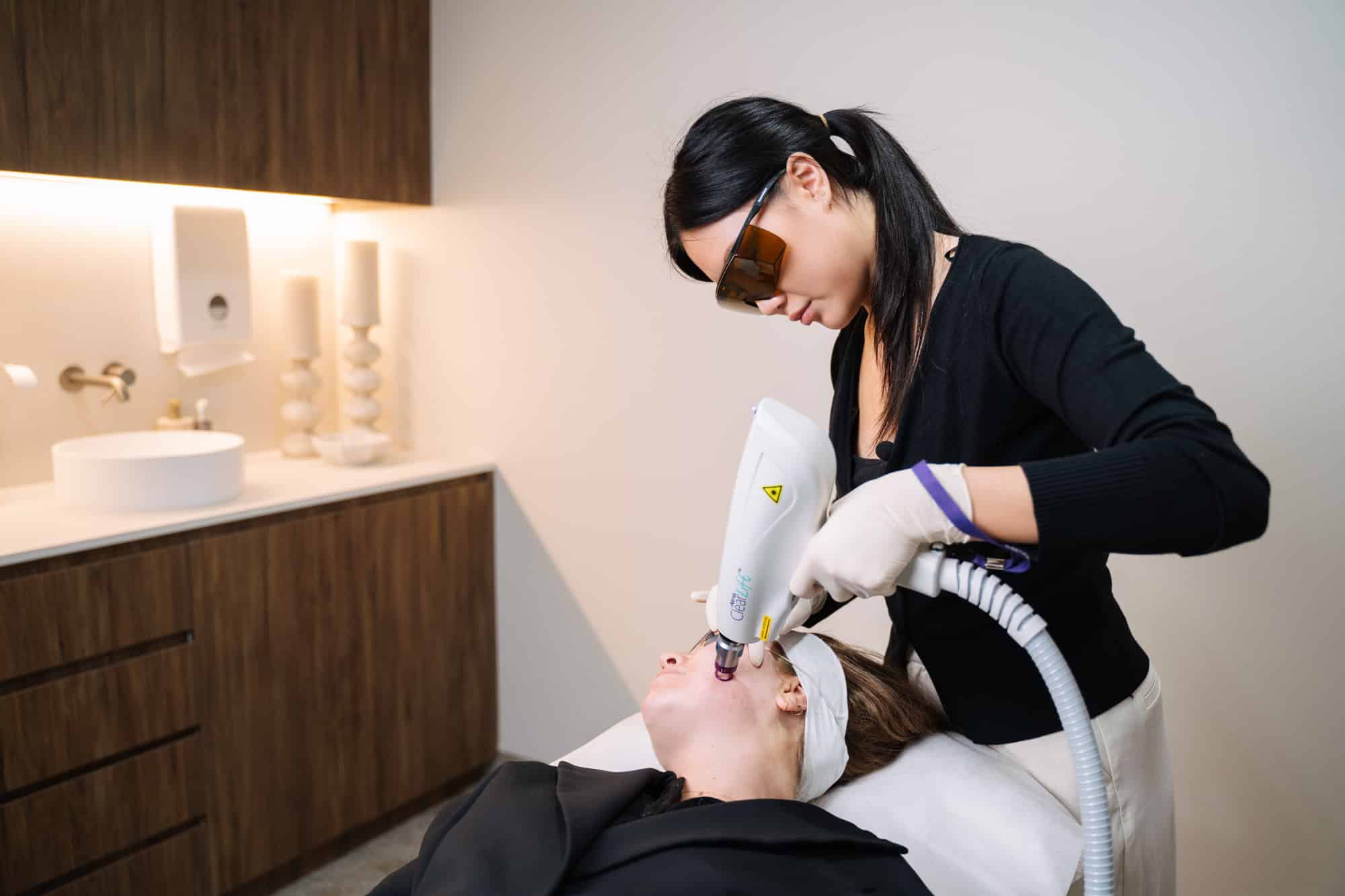
Non ablative lasers direct energy into the deeper layers of skin while leaving the surface largely intact. The mechanism varies by device, but the principle is consistent – controlled heat in the dermis without removing what is on top.

With 1540 fractional non ablative laser, micro beams create columns of coagulation within the dermis to support collagen remodelling and texture improvement. 

Laser Genesis and the Red Carpet Laser Facial use gentle long-pulse Nd:YAG heat to diffuse redness and refine pores. 

Q Switch lasers deliver very short, high-energy pulses targeted at pigment, helping to break it up while sparing surrounding tissue. 

Because the outer layer is preserved, non ablative treatments typically involve shorter, milder downtime – often a few days of redness or swelling rather than visible crusting.

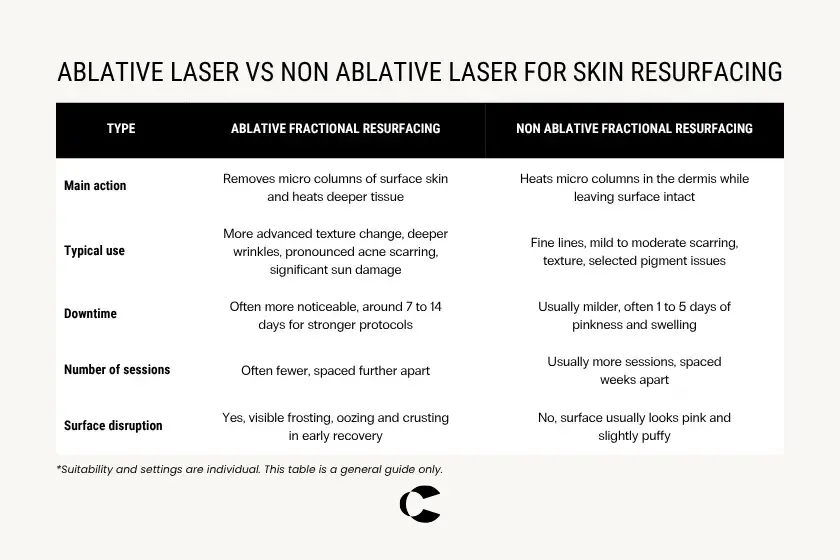
Table comparing Ablative Laser Vs Non Ablative Laser For Skin Resurfacing

Compare Ablative Laser vs Non Ablative Lase

Both ablative and non ablative resurfacing lasers can be used for skin resurfacing. In our clinics this mainly means ablative CO2 and Erbium and non ablative 1540 Fractional Laser and Q Switch laser. These treatments are designed to improve the appearance of fine lines, texture and overall skin quality. The right choice depends on your skin, your concerns and how much downtime you can realistically plan for.


Ablative vs Non Ablative Laser - Which One is Right For You?

If you are researching ablative v non ablative lasers at home, it is completely normal not to know which option might suit you.You don't need to know which kind of laser you'd like before you book at Contour Clinics. In your doctor-led consultation, we will talk through each laser option with you, considering your skin goals, concerns, history and tolerance for downtime, so you can make an informed decision. This video explains the differences between ablative and non ablative laser, with guidance on how your practitioner may assess the laser that's most suitable for you.
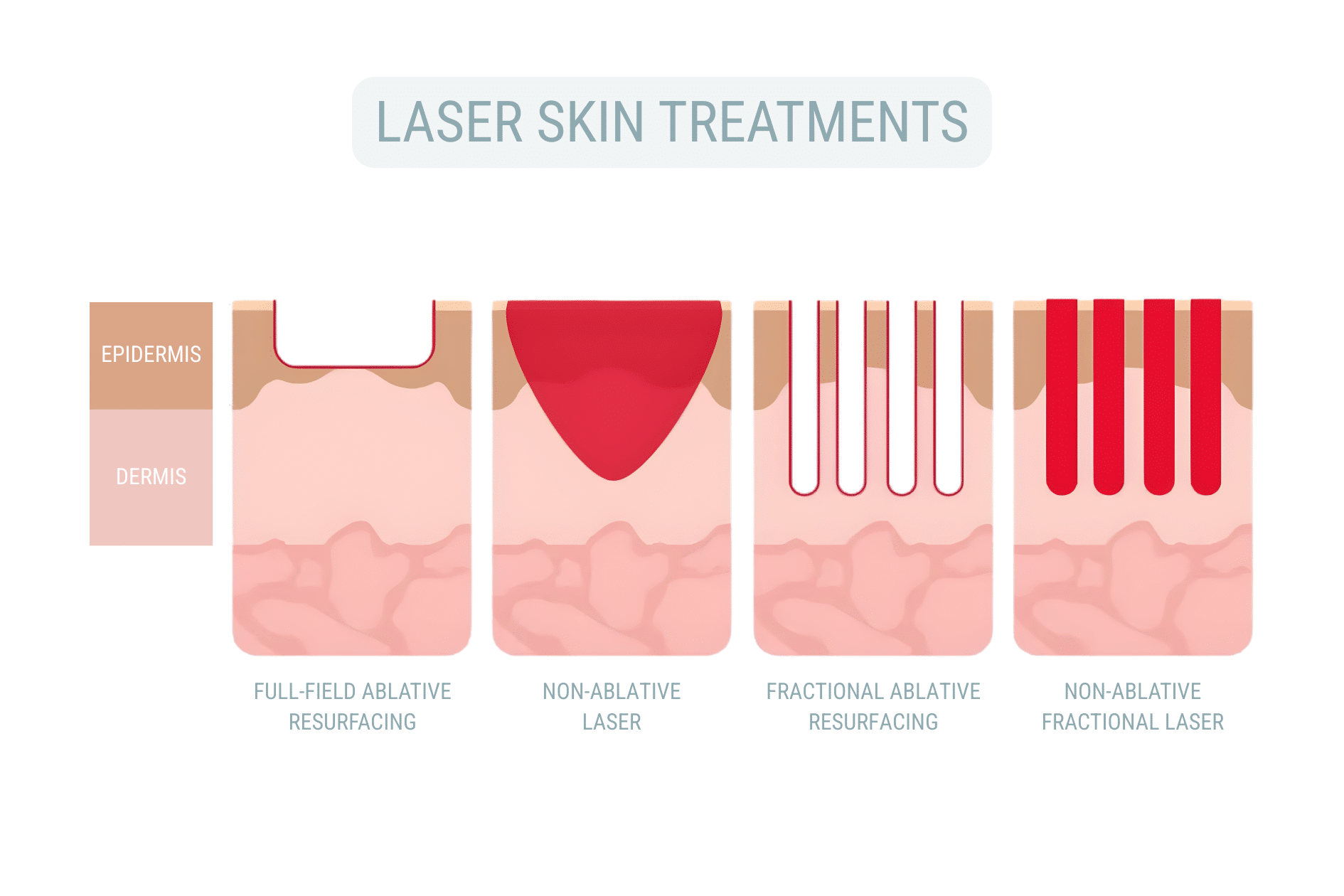
Graphic showing depth of penetration for laser skin resurfacing for ablative vs non ablative laser

What Conditions Can Ablative vs Non Ablative Lasers Treat?

Your treatment plan is tailored to you, but generally at Contour Clinics, when we are talking about resurfacing:

Ablative fractional lasers (CO2 and Erbium) may be considered for:

  • Deeper wrinkles and etched lines
  • More pronounced acne scarring
  • Marked sun damage and rough, leathery texture
  • Coarse pores and thicker, weathered skin in suitable candidates

Non ablative fractional lasers may be considered for:

  • Fine lines and early wrinkling
  • Mild to moderate acne scarring
  • Texture irregularities and noticeable pores
  • Selected pigmentation changes and general skin dullness

Beyond resurfacing, non ablative treatments such as Laser Genesis, Red Carpet Laser Facial, Q Switch laser, IPL, Potenza RF Microneedling and Morpheus8 RF Microneedling can aid more targeted concerns including redness, pigment and early laxity. These treatments may sit alongside your resurfacing plan if appropriate.

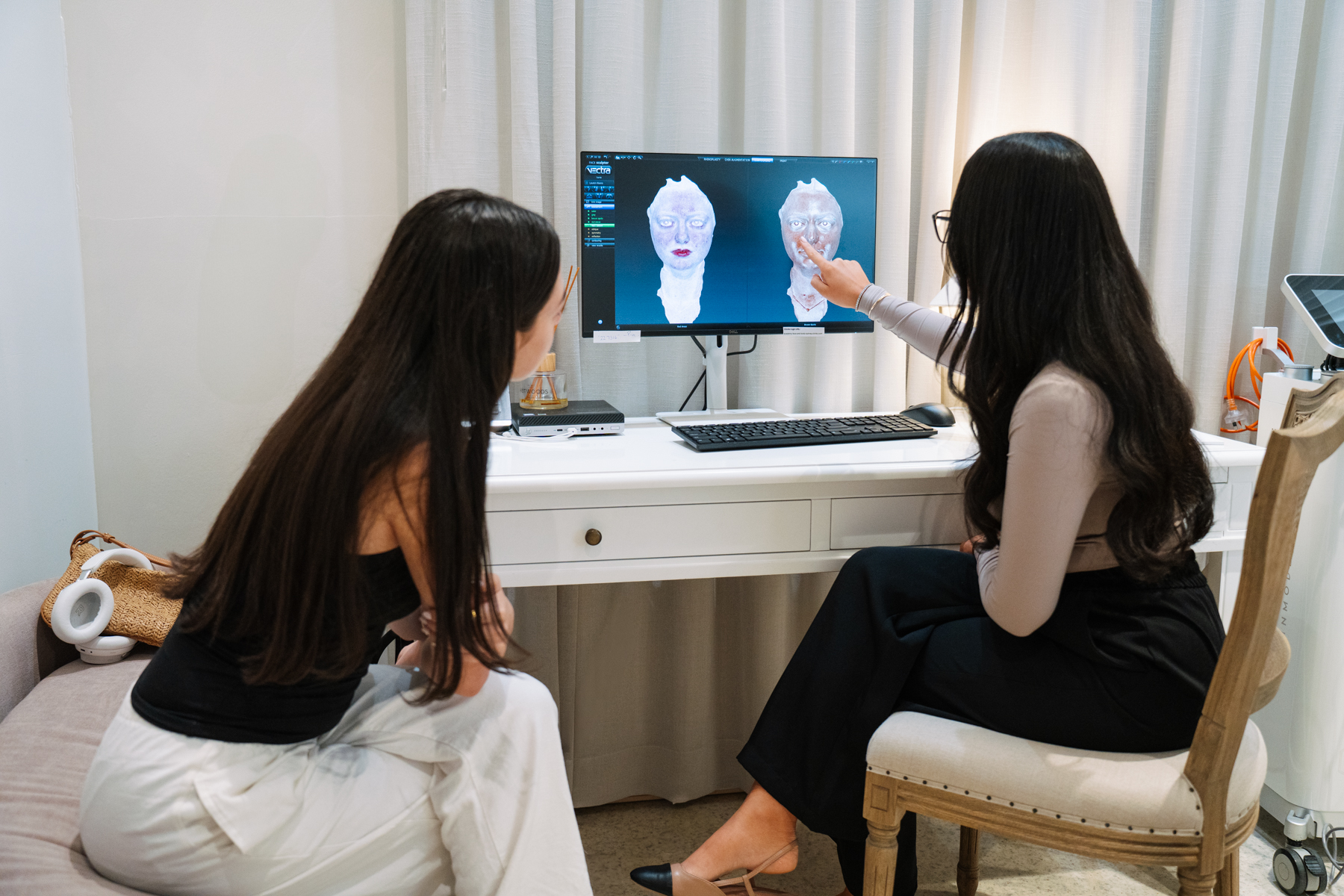
Patient and cosmetic practitioner in a consultation at Contour Clinics for Co2 laser

What Are The Benefits Of Ablative Laser Treatment?

In suitable candidates, potential benefits of ablative fractional lasers include:

  • Intensive resurfacing – can target more advanced texture change and deeper etched lines than many non ablative options
  • Fewer treatment sessions – Because each session can be stronger, some people may need fewer visits overall
  • Pronounced collagen stimulation – The combination of surface ablation and deeper coagulation can drive significant remodelling over time

These benefits come with increased downtime, stricter aftercare and a higher risk of side effects if settings, skin type or home care are not appropriate. Careful assessment, planning and follow up are essential.

Benefits of non ablative laser for skin

What Are The Benefits Of Non Ablative Laser Treatment?

Potential benefits for suitable people include:

  • Surface remains intact – No open channels on the day of treatment and typically no weeping or crusting
  • Milder downtime – Most people experience a few days of redness and swelling that can be easier to fit around work and family life
  • Gradual, buildable change – Treatments are usually staged across several sessions so improvements develop over time
  • Versatile for early changes – Often considered when concerns are mild to moderate or when someone is not ready for the downtime of ablative resurfacing

Non ablative options are often used for redness, enlarged pores and a general brightening effect with minimal or no visible downtime. Non ablative laser is particularly useful for addressing active acne (not acne scarring). It helps shrink sebaceous glands which supports long term control of acne by treating it at the root of one of its main causes.

As with all medical procedures, results vary between individuals and cannot be guaranteed.

Book a consultation for cosmetic care at Miranda cosmetic clinic

What Is The Recovery Time For Ablative vs Non Ablative Laser Treatments?

Downtime is one of the biggest practical differences between ablative and non ablative resurfacing lasers, particularly when we are comparing CO2 or Erbium to 1540 fractional. It varies between people and depends on treatment strength, skin type, area treated and how closely aftercare is followed.

In our clinics, we see a wide range of responses to ablative and non ablative lasers. Some people recover faster than expected; others take longer. Part of your consultation is setting realistic expectations based on people with similar skin types and treatment strengths, while recognising that your skin is unique.

Treatment Type Typical Recovery Window* What You May Notice
Ablative fractional resurfacing  Around 7 to 14 days of visible recovery for stronger sessions, gentler protocols may be closer to 3 to 7 days Redness, swelling, weeping and crusting at first, followed by peeling and pinkness as new skin appears
Non ablative fractional resurfacing  Around 1 to 5 days in many people, some look close to normal sooner Pinkness, warmth, a sunburn like feeling, possible roughness or light flaking

*These ranges are general only. Some people recover faster and some more slowly.

Other treatments such as Laser Genesis, Red Carpet Laser Facial and Q Switch laser are non ablative and usually involve much milder or minimal downtime. IPL and RF microneedling typically sit in between, with a few days of redness or pinpoint marks depending on the treatment.

If you have an important event or travel planned, make sure you mention this to your practitioner. We’re happy to time treatments around your commitments and can suggest options that may better suit your schedule.

Graphic showing depth of penetration for laser skin resurfacing for ablative vs non ablative laser

What Are The Side Effects Of Ablative And Non Ablative Lasers?

All medical procedures carry risks. The side effects described here relate mainly to resurfacing treatments, where we are delivering more intensive energy into the skin. Your individual risk profile is discussed in detail at consultation and documented in your medical record with us.

Side effects that can occur with both ablative and non ablative resurfacing lasers include:

  • Redness, swelling and discomfort
  • Temporary darkening or lightening of the skin
  • Breakouts or flares of underlying skin conditions such as acne or cold sores
  • Infection if the skin barrier is compromised and aftercare is not followed
  • Delayed healing in some people

To support your safety, comfort and results, at Contour Clinics we:

  • Thoroughly review your medical and skin history
  • Use medical grade devices in medically accredited facilities
  • Provide clear written aftercare and red flag symptoms
  • Review and adjust your plan as your skin responds over time
Laser treatment at Five Dock Contour Clinics cosmetic clinic

Which Laser Treatment Is Better For Wrinkles – Ablative Or Non Ablative?

For wrinkles, the most appropriate laser depends on:

  • How deep and etched the lines are
  • Your skin thickness and type
  • Your tolerance for downtime
  • How quickly vs gradual you would like to see change 
  • Any previous treatments and your current skincare routine

For resurfacing, we may typically use:

  • Ablative fractional lasers (CO2 / Erbium)
    • May be considered for deeper, more established wrinkles, such as around the mouth and eyes, in suitable candidates
    • Usually require more intensive downtime planning
  • Non ablative fractional laser
    • May be considered for fine lines and early wrinkling, where the aim is to soften texture and support skin quality
    • May suit people who prefer shorter recovery periods across several treatments

Often, lasers are combined with other collagen stimulation treatments and medical calibre skincare as part of a broader plan. The best approach is discussed with you during consultation.

Consistent Skin Support with an LED Light Therapy Membership at Contour Clinics

How Painful Are Ablative vs Non Ablative Laser Treatments?

Your comfort is a real and common concern, and is something we plan for from the beginning. The descriptions below focus on resurfacing lasers (CO2, Erbium and 1540 fractional). Milder treatments such as Laser Genesis and Red Carpet Laser Facial are usually more comfortable again, but are still planned with your comfort in mind.

  • Ablative fractional resurfacing (CO2 / Erbium)
    • Often feels more intense due to surface ablation and deeper heat
    • Usually requires a stronger topical anaesthetic and cooling
    • During treatment you may feel heat, stinging and a prickling sensation
    • Afterwards, many people describe a strong sunburn like feeling that settles over the following days with appropriate aftercare
  • Non ablative resurfacing
    • Generally considered more comfortable than ablative resurfacing at similar coverage
    • Sensations are often described as heat and rubber band snaps on the skin
    • Topical anaesthetic and cooling are still commonly used for comfort

Pain perception varies a lot between individuals. Your practitioner can pause, adjust settings or reconsider your plan if you are finding the procedure more uncomfortable than expected.

Patient in patient lounge at skin and laser clinic Narellan, waiting for cosmetic procedure

Is Ablative Or Non Ablative Laser Right For Me?

There is no single best laser. The right choice depends on:

  • Your main concerns, such as wrinkles, scars, pigment, texture or a combination
  • How much downtime you can realistically allow
  • Your skin type and medical history
  • Any previous procedures and your current skincare routine 
  • Your preferences around gradual change versus a more intensive resurfacing approach

Still unsure? It’s completely normal to be uncertain about where to start. Many patients are confused about which laser skin treatment they need. Book a consultation today to discuss your options with our experienced practitioners. 

Results may vary between individuals and depend on personal goals, baseline characteristics, and responses to treatment. A consultation with a qualified medical professional is recommended to determine if these treatments are suitable for you.

The Contour Medical Team

About The Contour Medical Team

This article has been prepared for general informational purposes only. It does not constitute medical advice, diagnosis, or a treatment recommendation. Suitability for any cosmetic treatment varies between individuals and should be assessed in a 1:1 consultation with a qualified practitioner. If you have questions about your specific situation, we encourage you to book a consultation or contact our team directly.

Are You Ready?

Book Now

Ready to book? Still have questions? Leave us a message and we will get back to you as soon as possible.


or call us on 1300 233 803