How to address frown lines?
Most consultations in cosmetic medicine may improve, not completely erase an aesthetic concern. No treatments are guaranteed and any education provided here should be taken as general and may not relate to your unique circumstances.
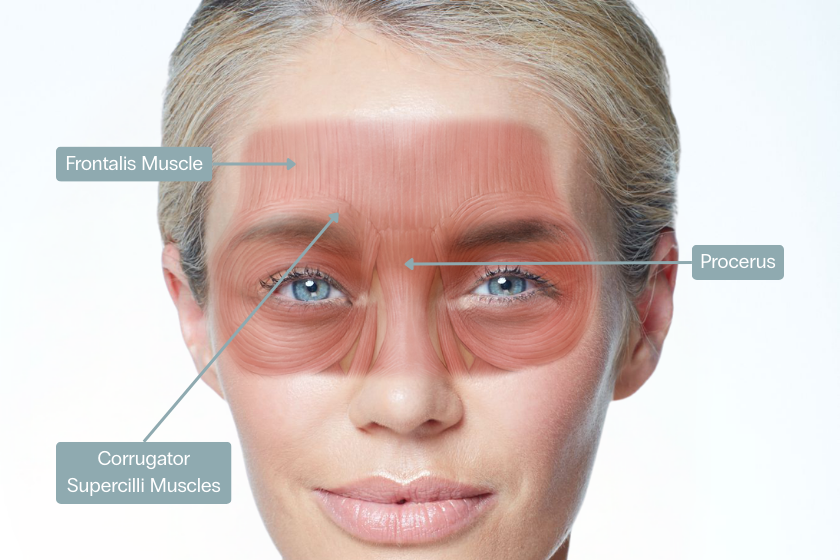
In the majority of cases, frown lines are caused by the repetitive movement of the “glabella complex” of muscles that are located between your brows. Frowning, straining, spending time squinting in the sun or concentrated on a computer can cause long-term excessive movement of these muscles causing a worsening appearance of frown lines. Relaxation of the muscles can result in smoothing of frown lines and a general appearance in the upper face area.
For some patients the main issue is a loss of volume. There are many ways to restore lost volume which your Cosmetic doctor at your complimentary consultation will discuss with you.
Similarly, worsening of frown lines can be increased by loss of collagen and elastin in the skin. We start to lose 1% of our collagen per year from the age of approximately 25. This increases the appearance of frown lines and deep creases.
How are frown lines treated?
Frown lines can be influenced by several factors, including repeated facial movement, skin quality and elasticity changes over time, and individual facial anatomy. Because the cause differs between people, the most appropriate approach is determined after a personalised assessment and 3D photography.
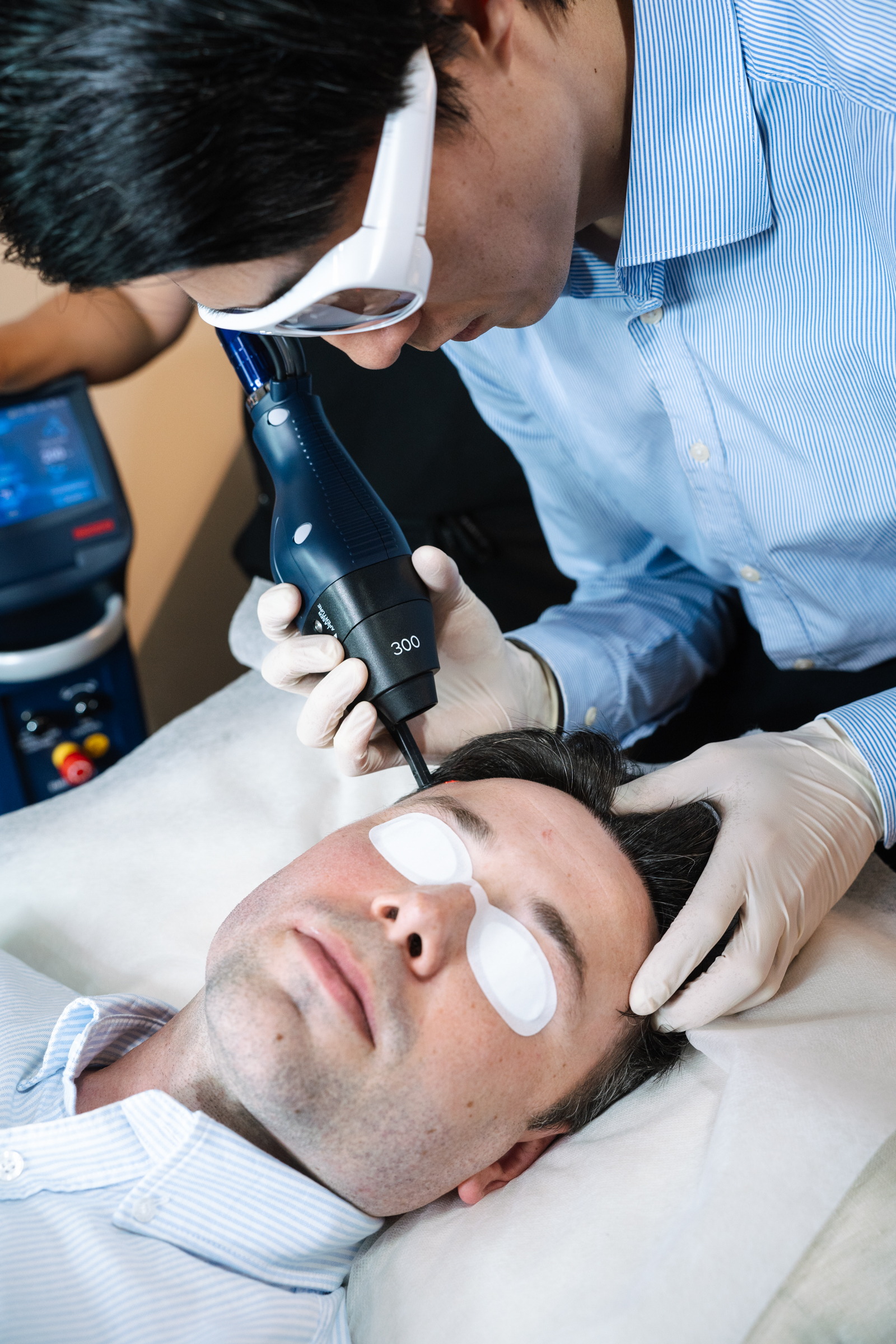
During a consultation, your clinician can explain which options may be suitable for your concerns and discuss realistic expectations, risks, downtime and aftercare. Australian TGA and AHPRA advertising rules limit how clinics can describe certain prescription-only treatments online, so some details are discussed one-to-one during your appointment.
Who’s a candidate for frown line consultations?
People who may consider frown line consultations often have concerns about lines forming between their eyebrows. Some patients seek advice when these lines first become noticeable, while others choose to address frown lines later.
Suitability for treatment will be assessed individually during your consultation. Results vary between individuals.
Can you reduce frown lines naturally?
Small improvements may be possible with lifestyle modifications. Much of the repetitive action of the frown muscles is caused by excessive concentration, squinting, negative emotion/concern. Relaxation strategies to reduce stress, taking breaks from long stints in front of the computer and wearing sunglasses in the sun can help to reduce automatic/unconscious overactivity of the frown muscles.
Similarly collagen reduction over the years is responsible for volume loss and deep lines remaining etched in the skin. Providing the necessary building blocks for collagen synthesis through a balanced diet can help to slow the degradation of collagen in our skin, as can protecting the skin from harmful UV rays.
What causes frown lines?
The main cause is muscle movement and overactivity of the frown muscles. Other causes include:
- Excessive sun exposure:
- This damages collagen and elastin making it easier for creases to form, deepen and become a permanent frown line on your face.
- Genetics
- Some of us are more prone than others to wrinkles. Genes determine muscle structure, facial structure, collagen production and skin type. All are relevant to the development of frown lines.
- Lifestyle factors
- Smoking, excessive alcohol consumption, poor sleep habits, dehydration, lack of exercise and an unbalanced diet all contribute to worsening wrinkles.
Are frown lines normal?
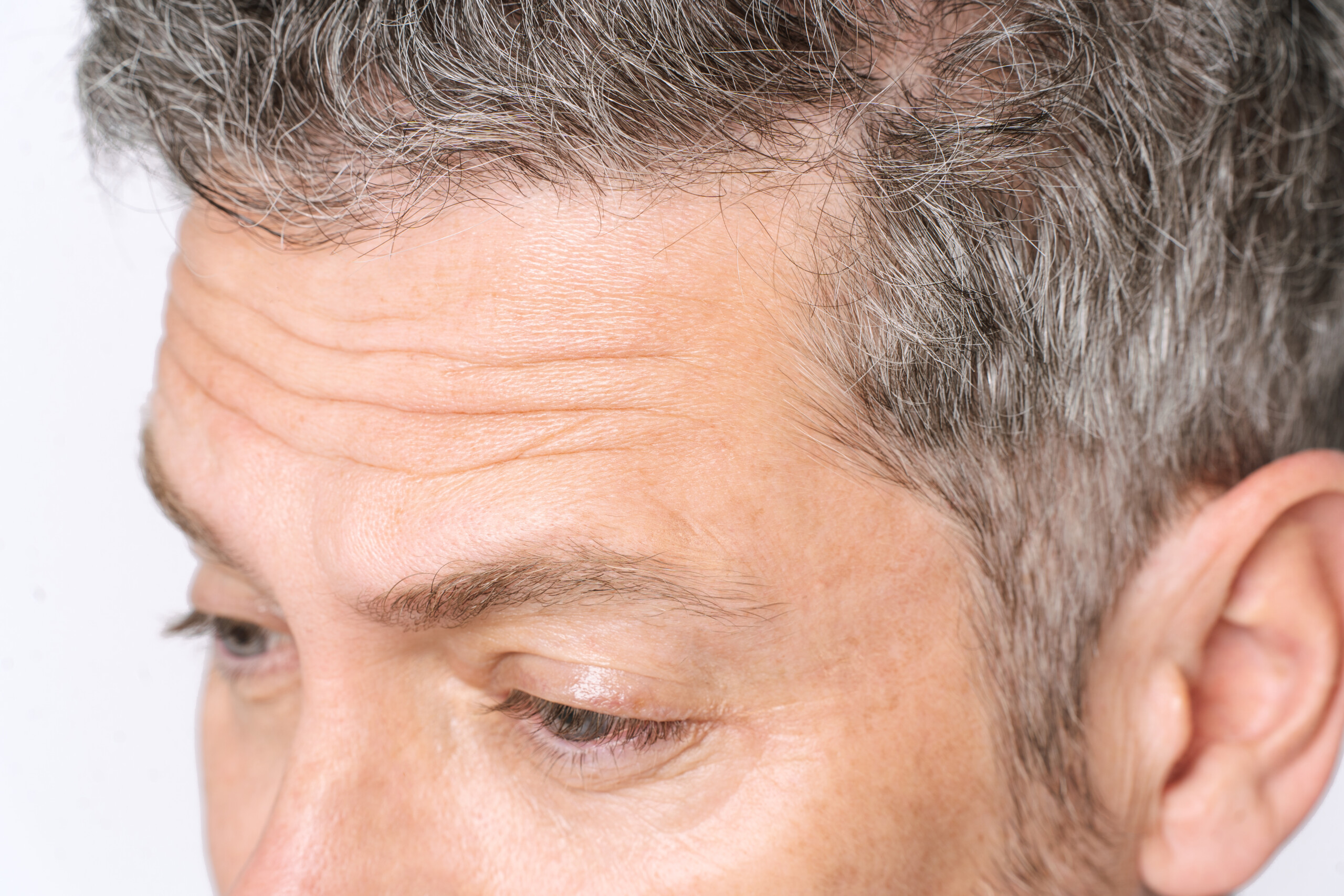
Yes, frown lines are completely normal and develop naturally as part of the ageing process. They form due to repeated facial expressions—such as frowning, squinting, or concentrating—which cause underlying muscles to contract and fold the skin. Over time, these repeated movements can lead to permanent lines and wrinkles.
-
Around 80% of adults report noticing prominent frown lines by the age of 40.
-
Studies indicate that over 50% of women and men seek cosmetic treatments primarily to reduce or prevent frown lines and forehead wrinkles.
- Research suggests that frown lines typically start appearing in the late 20s to early 30s, becoming progressively more visible with age.
While frown lines are a normal occurrence, many people choose treatments to soften their appearance, creating a smoother, more youthful look.